The guide
Everything to know before you book
On this page
Every year, more international patients fly to Albania for dental implants, and most of them start with the same three questions: is it safe, what does it really cost, and how does the whole thing actually work from first email to final crown. This guide answers all three without marketing gloss, written by the team at BlueMagic Group Dental in Tirana. Read it even if you end up treated elsewhere; the questions it teaches you to ask are the ones that protect you anywhere.
Why Albania, and why now
Albania has quietly become one of Europe’s fastest-growing dental destinations for a simple, structural reason: Western European per-tooth prices meet Balkan operating costs a short flight away. Tirana is one to three hours from most European hubs, no visa is needed for short stays by citizens of the EU, UK, US and many other countries, and a complete implant-plus-crown restoration here costs a fraction of typical private prices across Western Europe and the United States.
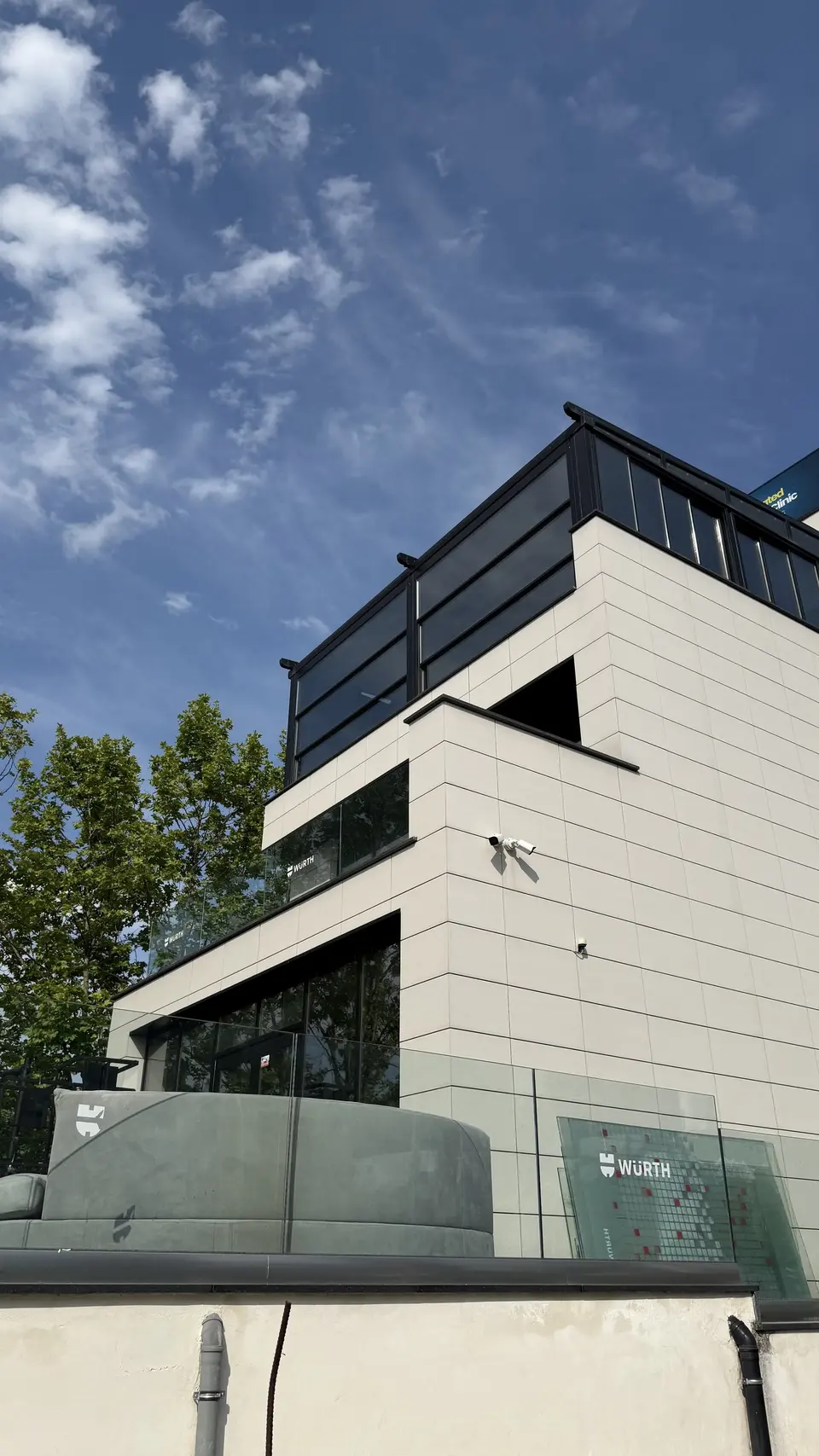
BlueMagic Group Clinic came to Tirana after more than 12 years treating international patients in Istanbul: over 35,000 procedures for people from more than 120 countries, rated 4.6/5 from 1,475 Trustpilot reviews. The group invested in a brand-new 1,500 m² facility in central Tirana, the largest dental clinic of its kind in Albania, and brought its patient-journey system with it: multilingual coordinators, VIP transfers, written plans and structured aftercare.
Is dental treatment in Albania safe?
Safety in implant dentistry is not a country property; it is a clinic property. The honest questions to ask any clinic, in any country, are: which implant system will be placed in me, in writing? Is the treatment plan documented before I commit? What are the sterilization protocols? What happens if something fails after I fly home? A clinic that answers all four in writing is worth considering anywhere; a clinic that answers none of them is a risk even on your own high street.
Here is how we answer them. Every case is planned tooth by tooth and documented in writing before treatment. Instrument sterilization follows standardised, monitored autoclave cycles; single-use materials are used once and discarded. You meet your treating dentist in person at consultation, before anything begins, and nothing proceeds without your explicit agreement. And the guarantee terms, including how a failed implant integration is handled, are written into your individual plan, not left to goodwill.
Materials: what goes in your mouth, by name
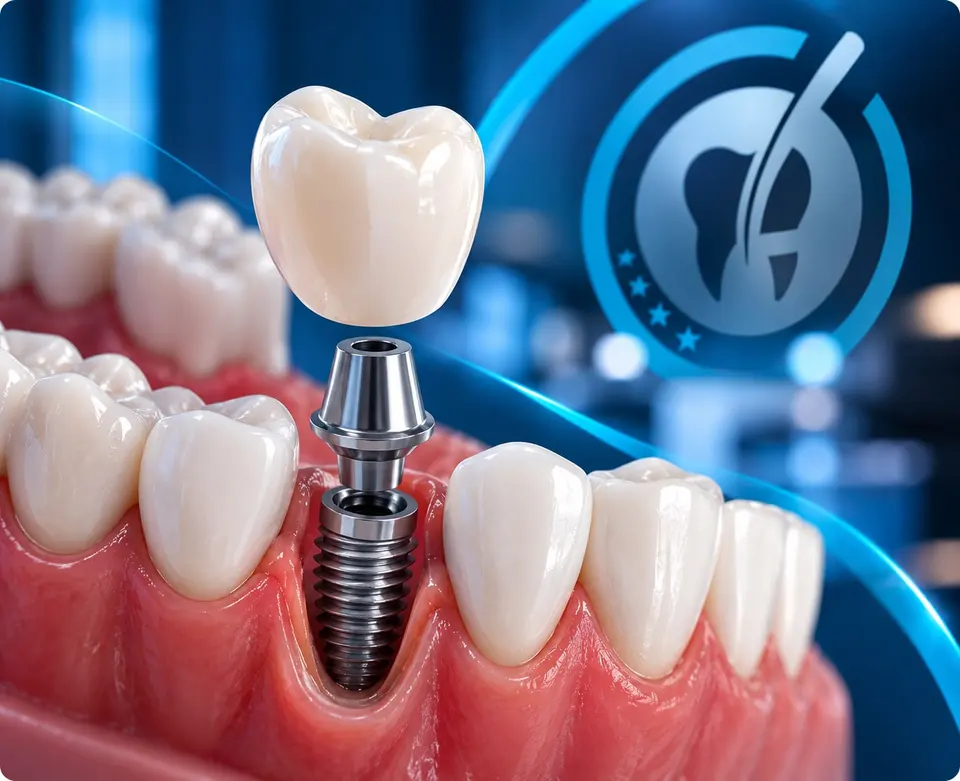
Every implant we place comes from the Straumann Group, one of the world’s leading implant manufacturers: Nuvo, Neodent, Medentica, or the flagship Straumann system itself. Every ceramic restoration (crowns, bridges, full arches) is crafted in Ivoclar-Vita materials, including monolithic zirconium and E-max. These names appear in your written quote per tooth and in your clinical records, so that any dentist anywhere can identify exactly what is in your mouth years from now. That portability is the point of documentation, and the single fastest way to sort serious clinics from the rest, at home or abroad, is to ask for the material names in writing.
The process, step by step
- Free assessment: send photos of your smile, and X-rays if you have them, through the online form. Five minutes, from your phone.
- Written plan in 24 hours: the dental team reviews your case and replies with a per-tooth plan: treatments, materials, visit count and one fixed price.
- You decide: question anything, compare the quote line by line with any other. No deposit to receive the plan, no payment until you go ahead.
- Travel: flights on your side; hotel assistance, VIP airport pickup and appointment scheduling on ours. A multilingual coordinator handles the details.
- Consultation in Tirana: clinical examination, plan confirmation and meeting your treating dentist, before any work begins.
- Implant placement: implants are placed under local anaesthesia; most patients describe pressure rather than pain. Recovery days are scheduled in.
- Healing at home: over 3–6 months the implant fuses with your bone (osseointegration). You fly home with written instructions and a coordinator one message away.
- Second visit: the final crowns or bridge are fitted, the bite is fine-tuned, and you approve the result before anything is cemented permanently.
- Aftercare: written care protocol, follow-up contact, an emergency line, and guarantee terms documented in your plan.
What dental implants cost in Albania
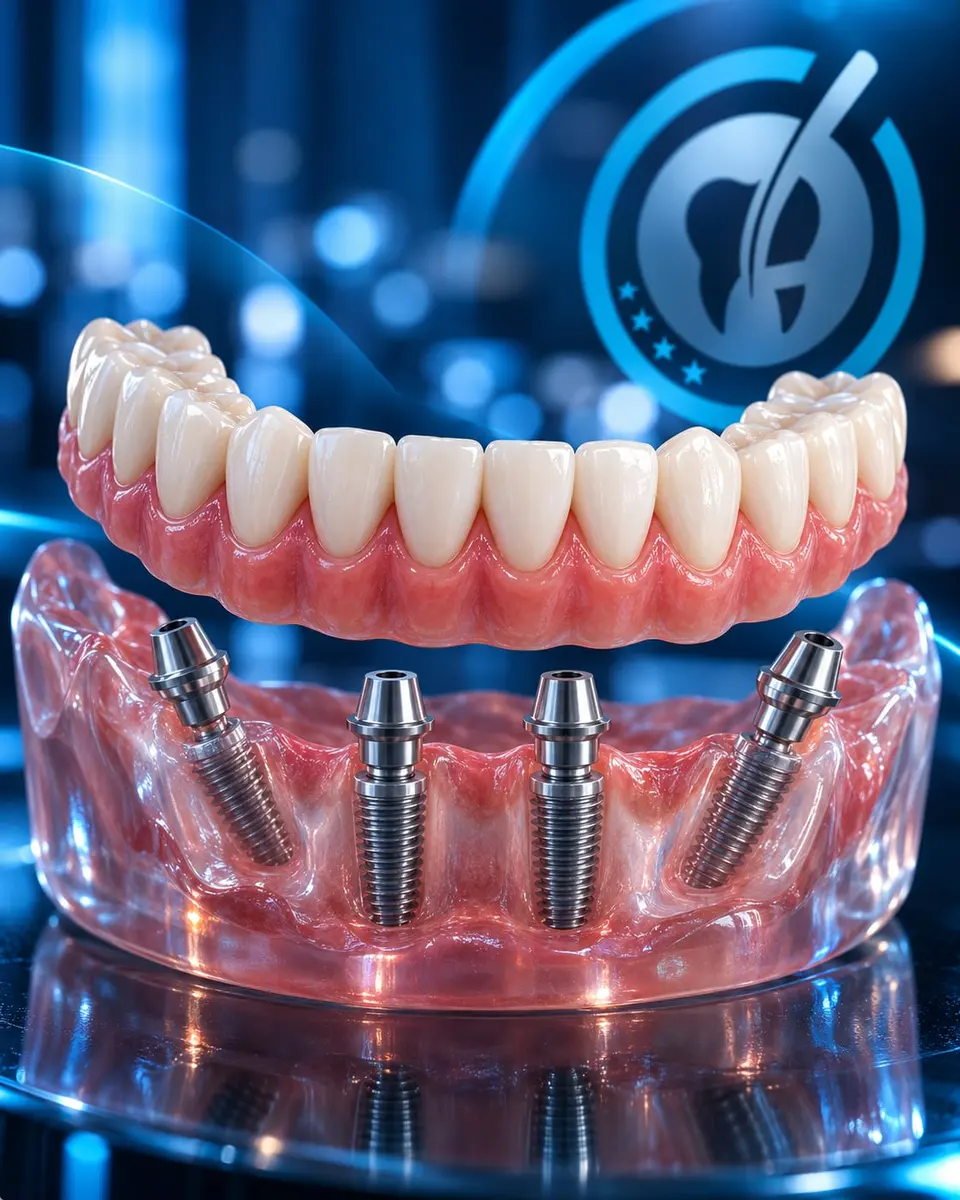
At BlueMagic Group Dental, implant treatment is priced per unit: the implant system (Nuvo, Neodent, Medentica or Straumann, all from the Straumann Group), the crown material and any groundwork your bone needs, with full-arch All-on-4 quoted per arch. Every unit is named and priced in your written quote, fixed after review of your photos and X-rays.
The reason for the gap with home prices is economics, not standards: Tirana rents, wages and administration cost a fraction of Western Europe’s, while implants and ceramics are bought from the same international manufacturers. A Straumann Group implant is the same object in both cities; the overheads around it are not.
Travelling to Tirana for implants
Tirana International Airport connects directly with most major European cities, with flight times of one to three hours from Western Europe and budget carriers on most routes. From arrivals, a driver meets you with your name: VIP transfers cover the airport and every clinic appointment. The clinic sits at 3 Kullat on Rruga Dervish Hima, in the walkable heart of the city, about 25 minutes from the airport; we assist with hotels nearby, including 5-star options. Between appointments you have a lively European capital: Skanderbeg Square, the Blloku café district, the Dajti cable car, and the coast at Durrës under an hour away. After surgical days, plan quiet evenings: sightseeing fits better around the non-surgical ones, and appointments are scheduled accordingly.
Aftercare, and what happens if something goes wrong
Aftercare is where treatment abroad succeeds or fails, so it is engineered rather than improvised. Before you fly home, you receive written care instructions, a hygiene protocol and any medication guidance. After you land: WhatsApp check-ins with your coordinator, photo reviews where useful, and an emergency line for urgent concerns. Many small issues resolve locally with our guidance; for staged implant plans, the second visit includes a full clinical review. Significant matters are handled per the guarantee terms documented in your plan, and because your implant system and ceramics are named in your records, any local dentist can identify exactly what they are looking at.
Who implants are not for
- Patients whose bone cannot support implants and who decline grafting: bridges or other prosthetics may serve better.
- Medical conditions that make surgery unwise: reviewed honestly at assessment, sometimes with a recommendation not to treat.
- Anyone promised permanent teeth in one visit for every case, anywhere: that is a red flag, not a schedule.
- Smokers unwilling to pause: smoking measurably raises implant failure risk, and we say so plainly.