

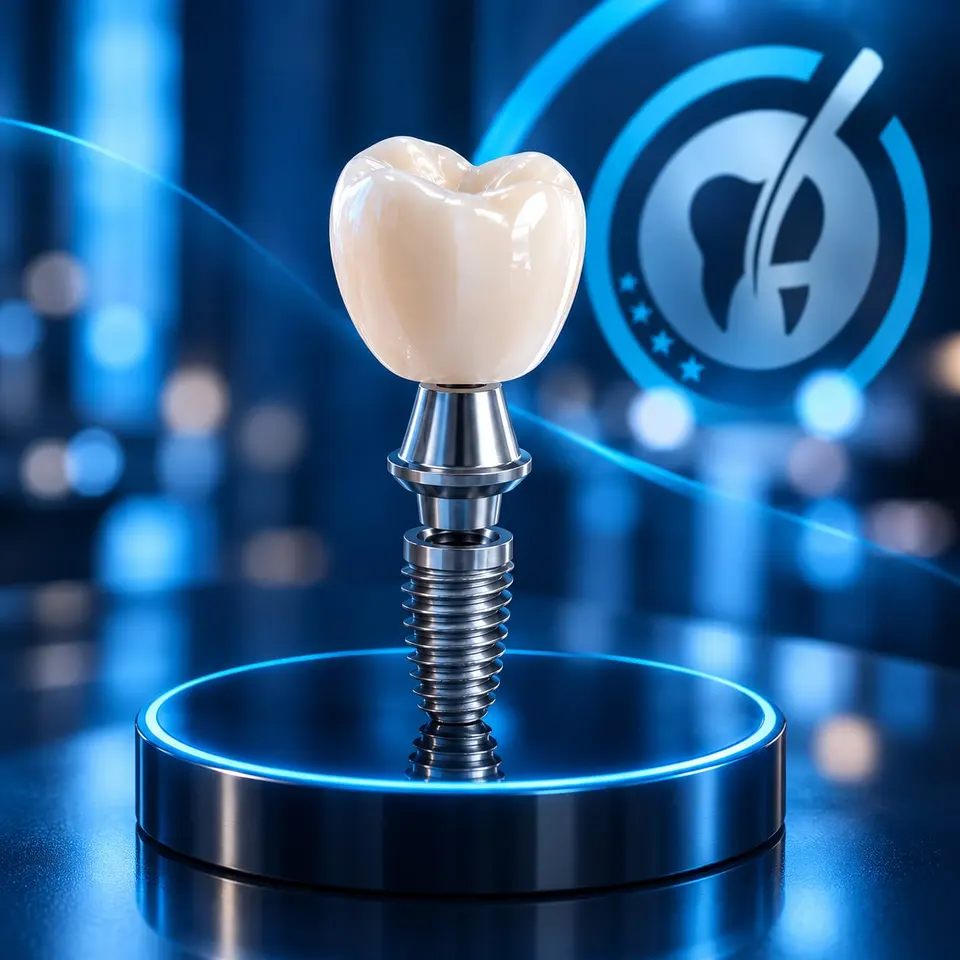
Dental implant
- How it works
- Titanium root in the bone, crown on top
- Neighbouring teeth
- Untouched
- Bone preservation
- Loads and preserves the jawbone
- Timeline
- 3–6 months, usually two visits
- Typical lifespan
- Decades with good maintenance
Restorative dentistry
A titanium root placed in the jaw, restored with a precision crown — the closest modern dentistry comes to growing a tooth back.
Before and after
A selection of real BlueMagic Group patients, photographed before and after treatment and published with their consent.
These cases cover a range of treatments and are not specific to this page. Individual results vary. Tap a photo to enlarge it.
Understand the treatment
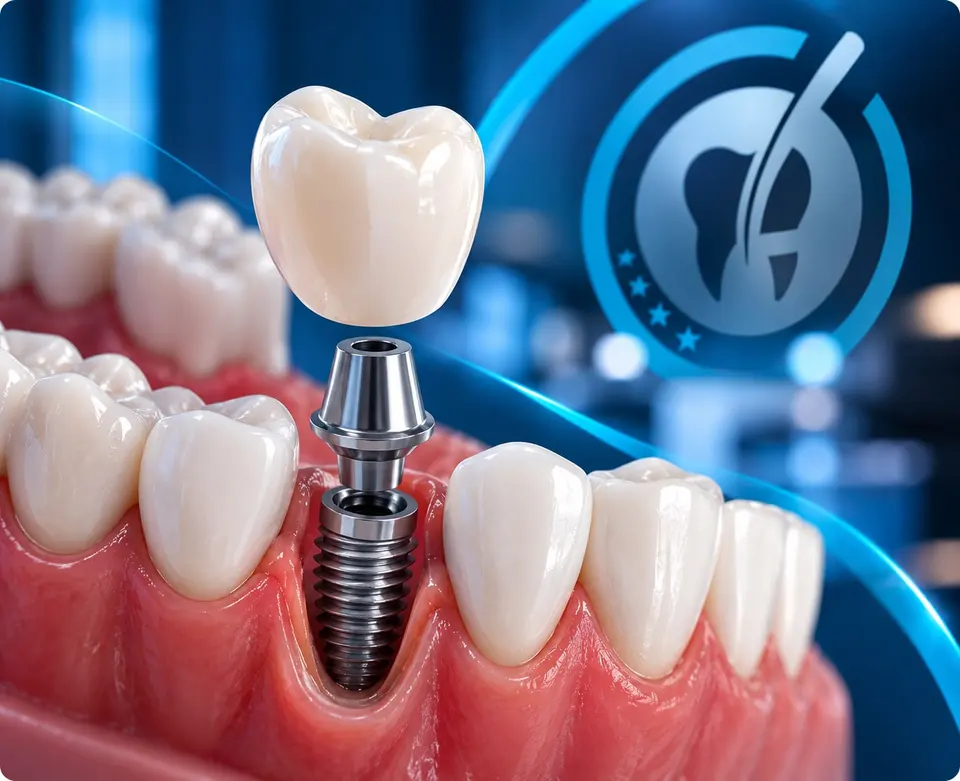
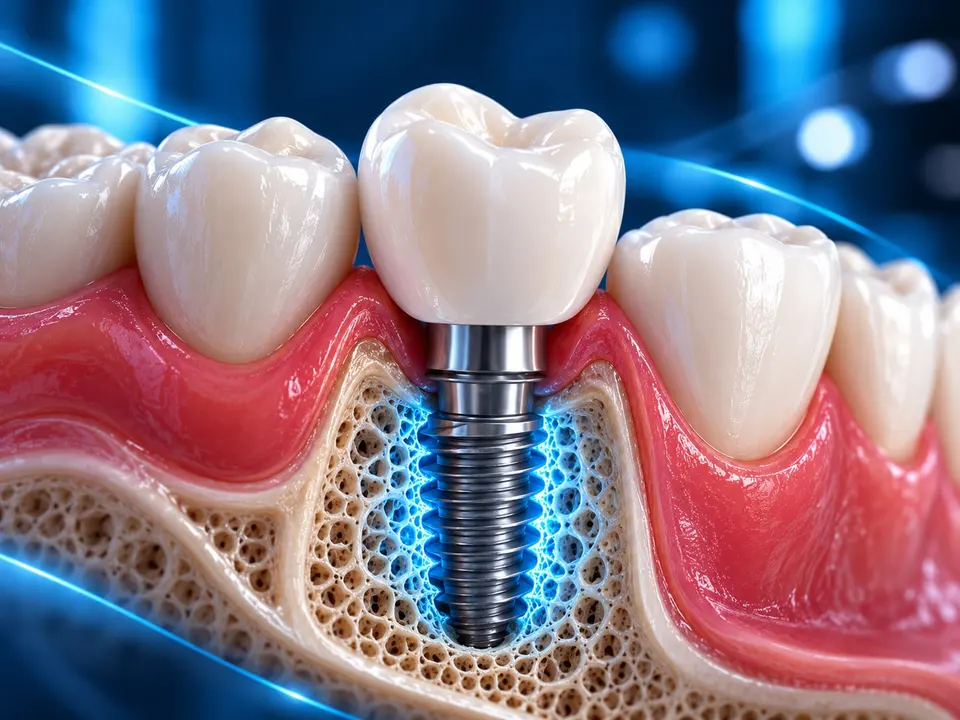
A dental implant is a small titanium post placed into the jawbone where a tooth root used to be. Over the following months the bone grows onto the implant surface — a biological process called osseointegration — until the implant is held as firmly as a natural root. A crown, bridge or full-arch prosthesis is then attached on top.
Because the implant is anchored in bone, it does exactly what a root does: it transmits chewing forces into the jaw, which keeps the bone stimulated and stops the slow bone loss that follows tooth extraction. That is the fundamental difference between implants and every removable or tooth-supported alternative.
BlueMagic Group Dental Tirana works with implant systems from the Straumann Group, one of the most researched implant families in dentistry: Nuvo, Neodent, Medentica and Straumann. Your dentist recommends the system based on your bone, your position in the mouth and your budget — and the system used is documented in your treatment records.
Implant systems we place
Osseointegration takes time — usually 3 to 6 months. No serious clinic can shortcut biology, which is why most implant plans are completed over two visits.

Is this you?
Candidacy is always confirmed by the dental team through a review of your photos and X-rays — this list is general guidance, not a diagnosis.
Gains and trade-offs
Benefits
Limitations
Treatment stages
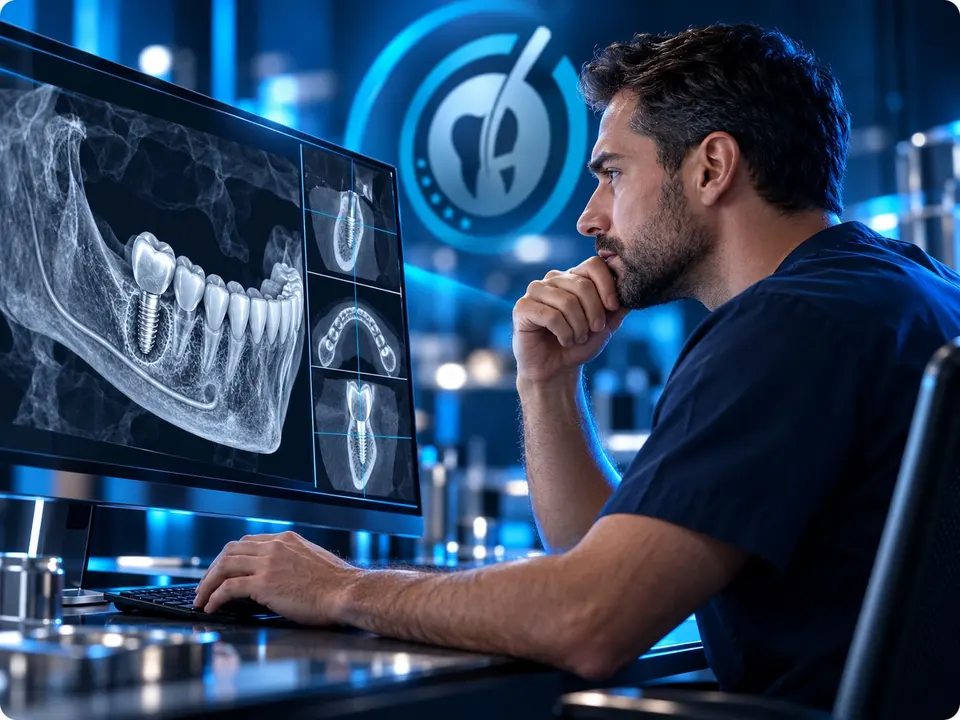
Your photos and panoramic X-ray are assessed; bone volume, gum health and bite are mapped into a written plan.
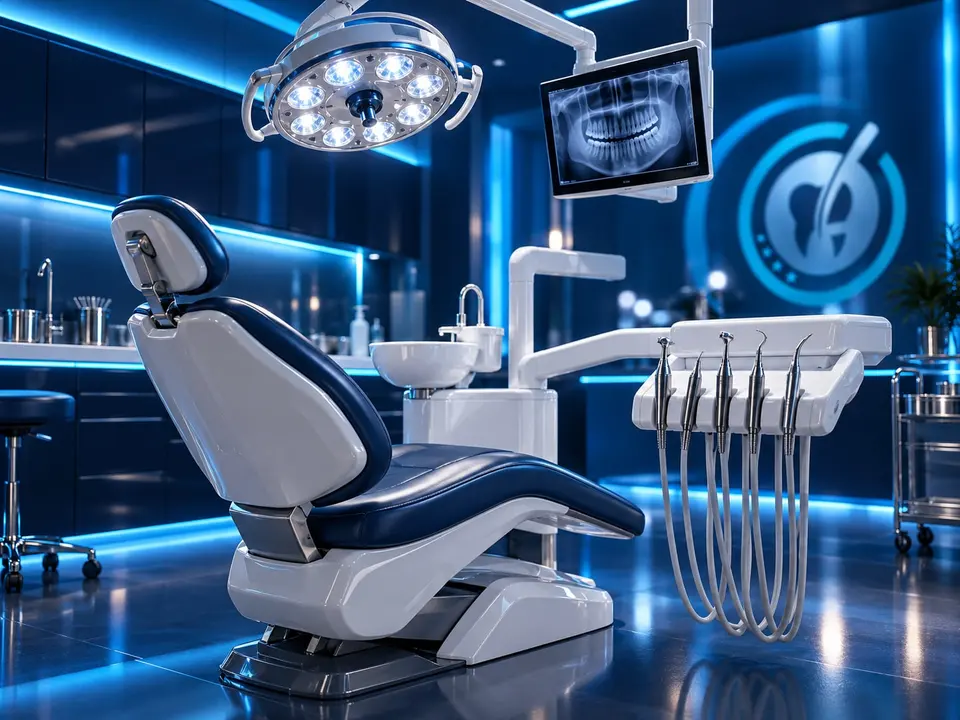
The implant is placed under local anaesthesia. Straightforward single placements take well under an hour; extractions, grafts or multiple implants extend the session.
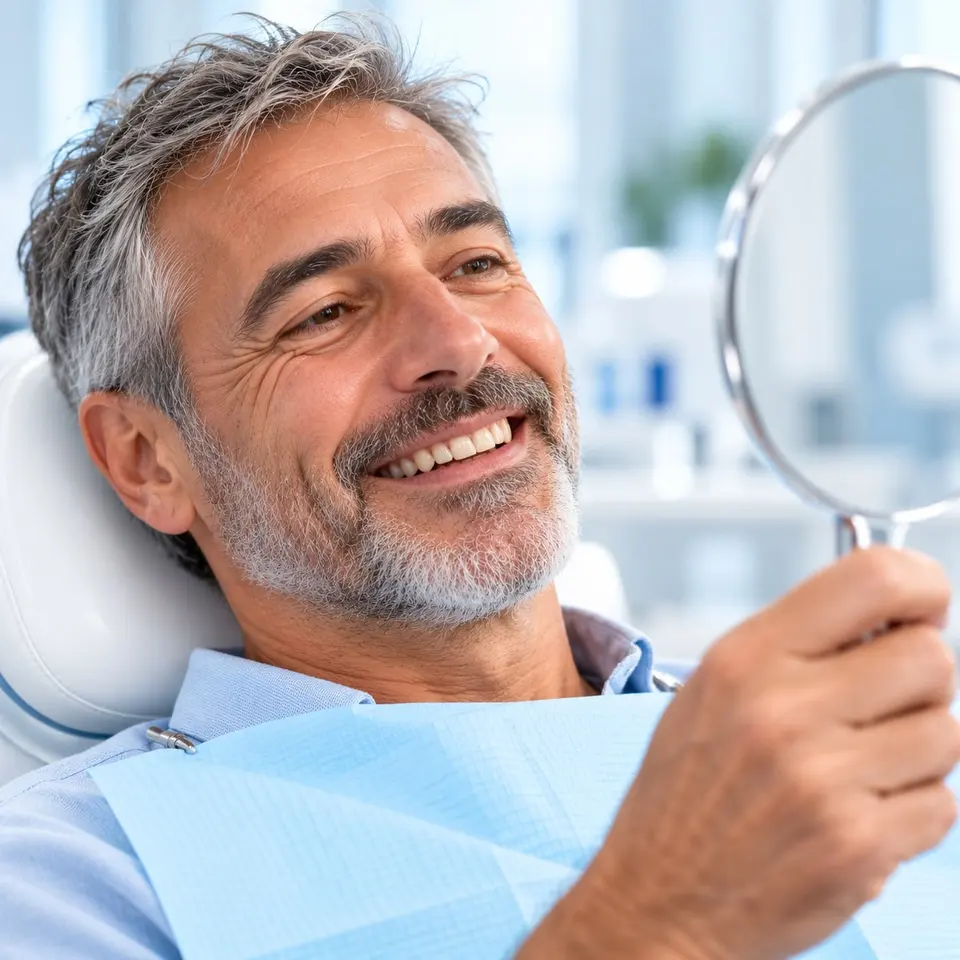
Where a visible gap matters, a temporary restoration protects the site and your appearance while bone heals.

You fly home and live normally while bone bonds to the implant surface. We stay in contact.
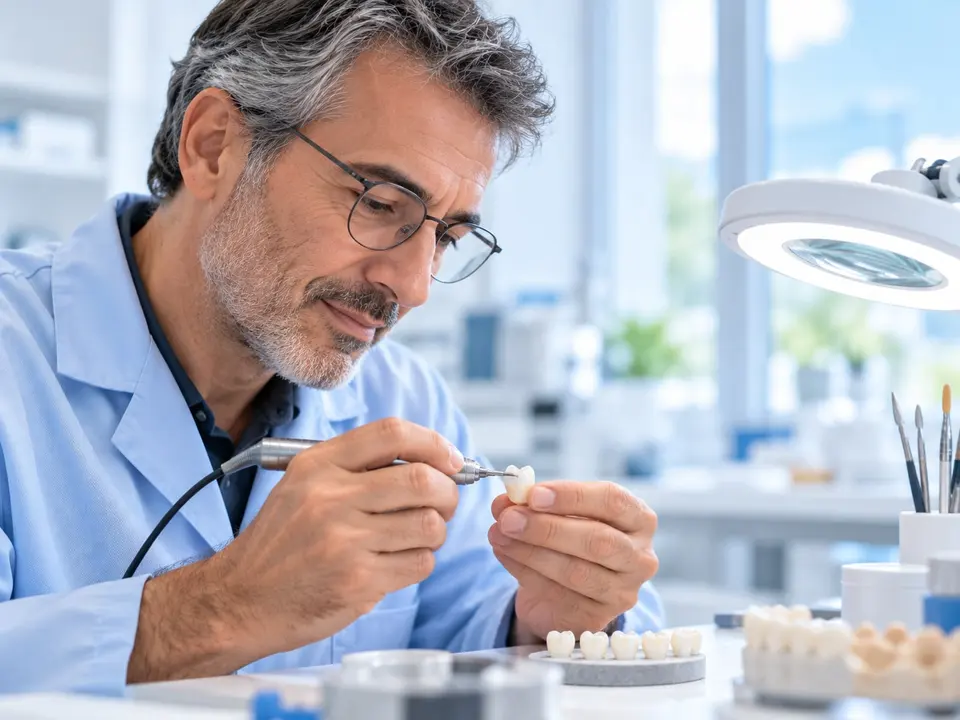
Back in Tirana, the implant is uncovered, impressions are taken, and your final crown or bridge is crafted and fitted.
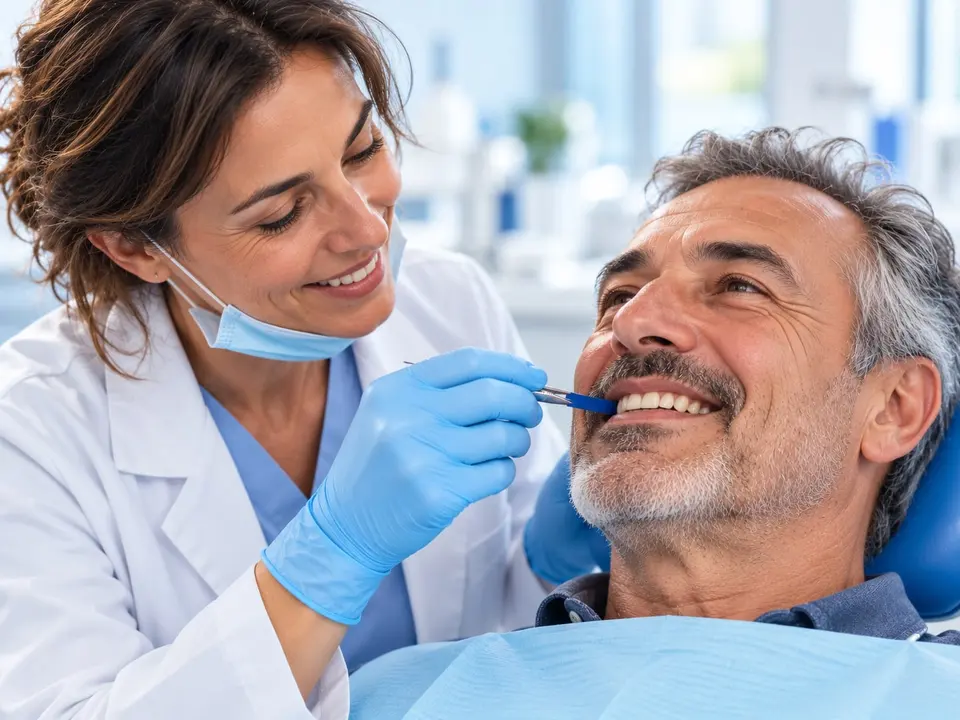
Occlusion is fine-tuned, hygiene instructions are handed over in writing, and follow-up contact is scheduled.
Your visits to TiranaMost plans: two visits, with healing at home in between
Transparent pricing
Your quote names the implant system, the crown and any groundwork such as grafts or sinus lifts — each priced per unit.
Every quote is personal: it is prepared only after a clinical review of your photos and X-rays, and that written plan is the binding one.
A few smile photos and, if you have one, a panoramic X-ray. It takes minutes and costs nothing.
The dental team maps every tooth, the materials and the visits, then sends a fixed written quote, usually within 24 hours.
Your plan is the reference for every visit. Any change is explained and agreed with you first, in writing.
Compare
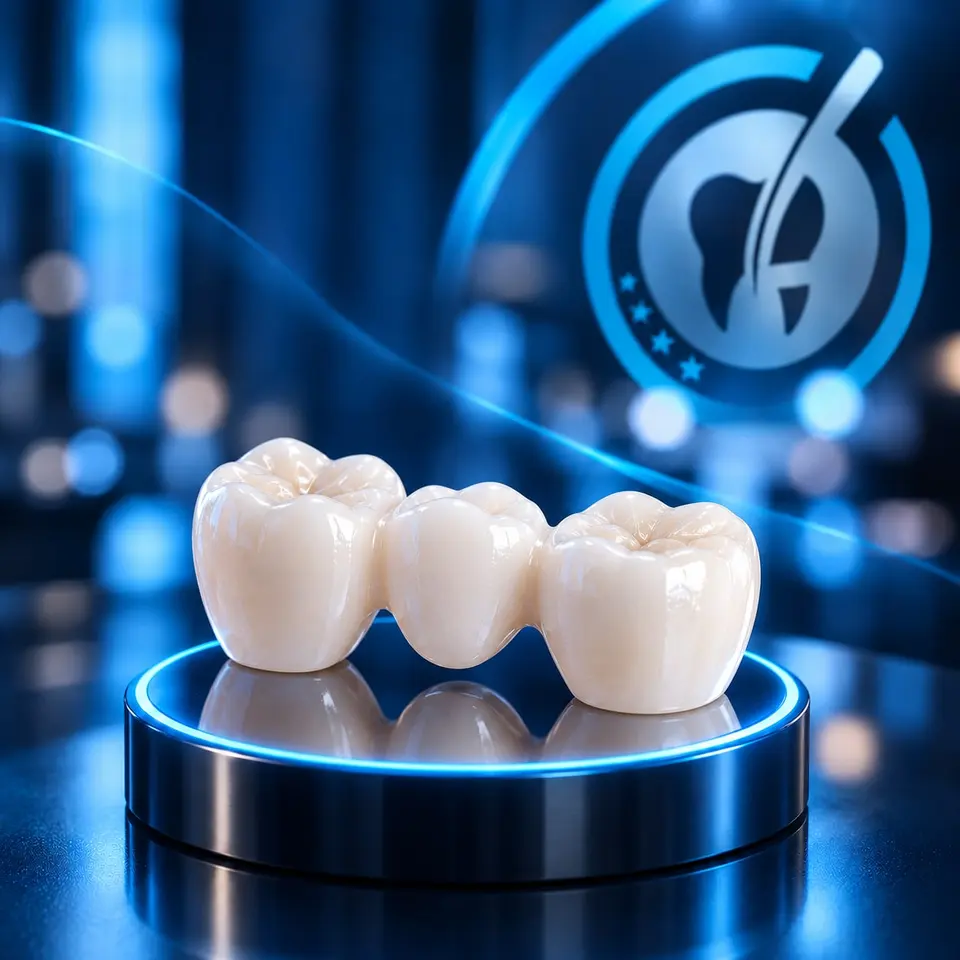
A bridge is sometimes the right answer — especially when neighbouring teeth already need crowns. The X-ray review tells us which case yours is.
Verified reviews
Real 5-star reviews from Trustpilot, where BlueMagic Group Clinic is rated 4.6/5 from 1,475 reviews.
“Wonderful experience I came from the US and got crowns done. My dentist was amazing he exceeded my expectations. The staff was so friendly if I had to do it all over I would pick this company every time”
Trustpilot ↗
“True to their word. Everything they promised was delivered and they stayed true to their word. Very convenient nothing to worry about. All you have to do is show up. They take care of the rest. Walter my care coordinator is with me every step of the way pre, during and post surgery. Great service.”
Trustpilot ↗
“They are 100% top-quality professionals. From the very first moment you contact them until your process is complete, they always answer all your doubts and questions. I highly recommend them. Bekim Hoxha was the first person I spoke with; he is an incredible and very kind individual—excellent work.”
Trustpilot ↗
Leadership & medical team
BlueMagic Group is led by its founders and a dedicated medical team, with one standard of care from the first message to your final check-up.
You always meet your treating dentist, by name, before any treatment begins.



After treatment
Days 1–3
Mild swelling and tenderness around the site; manageable with standard pain relief.
First week
Soft food on the other side of the mouth; gentle hygiene around the site as instructed.
Two weeks
Gums typically settled; most patients have long forgotten the placement.
Months 1–6
Silent healing — the bone does the work while you live normally.
Risks, honestly
Implant dentistry is one of the best-documented fields in medicine, but no procedure is risk-free. A small percentage of implants fail to osseointegrate and need replacement — published failure rates are low, and your quote explains how a failed integration is handled. Smoking, uncontrolled diabetes and poor oral hygiene are the three factors that most reliably worsen outcomes; we will tell you plainly if they apply to you. Other possible complications include infection, temporary numbness and, in the upper jaw, sinus involvement — all of which careful imaging and planning are designed to avoid.
Questions

Ask a coordinator in your language. Send a photo if it helps: a person answers, usually within 24 hours.
Chat on WhatsAppPlacement is done under local anaesthesia, and most patients report it feels less eventful than an extraction. Expect some tenderness and mild swelling for a few days afterwards, manageable with standard pain relief.
Because bone needs 3–6 months to bond to the implant before it can safely carry a crown. Visit one places the implant; visit two fits the final restoration. Any clinic promising permanent teeth on a fresh implant in every case is skipping biology — some immediate-load cases exist, but they are the exception the dentist must confirm, not the sales pitch.
Yes — a small percentage of implants do not integrate with the bone. The rate is low in healthy non-smokers with good hygiene, and your written plan explains exactly how a failed integration would be handled.
Bone can often be rebuilt with grafting or a sinus lift, or the plan can use angled implants to work with the bone you have. The panoramic X-ray answers this before you travel.
It matters. Smoking constricts blood supply and measurably increases implant failure and gum complications. We will not refuse every smoker, but we will be honest about your elevated risk and ask you to pause smoking around surgery at minimum.
The implant itself can last decades — many do. The crown on top may need replacement after 10–15 years of wear. The honest variable is you: hygiene and regular check-ups are what keep peri-implantitis away.
All four systems we place are from the Straumann Group and clinically documented. The pricier systems offer the deepest research record and widest component availability worldwide; the team recommends based on your site and needs, and the choice is always yours.
Keep exploring
 Treatment
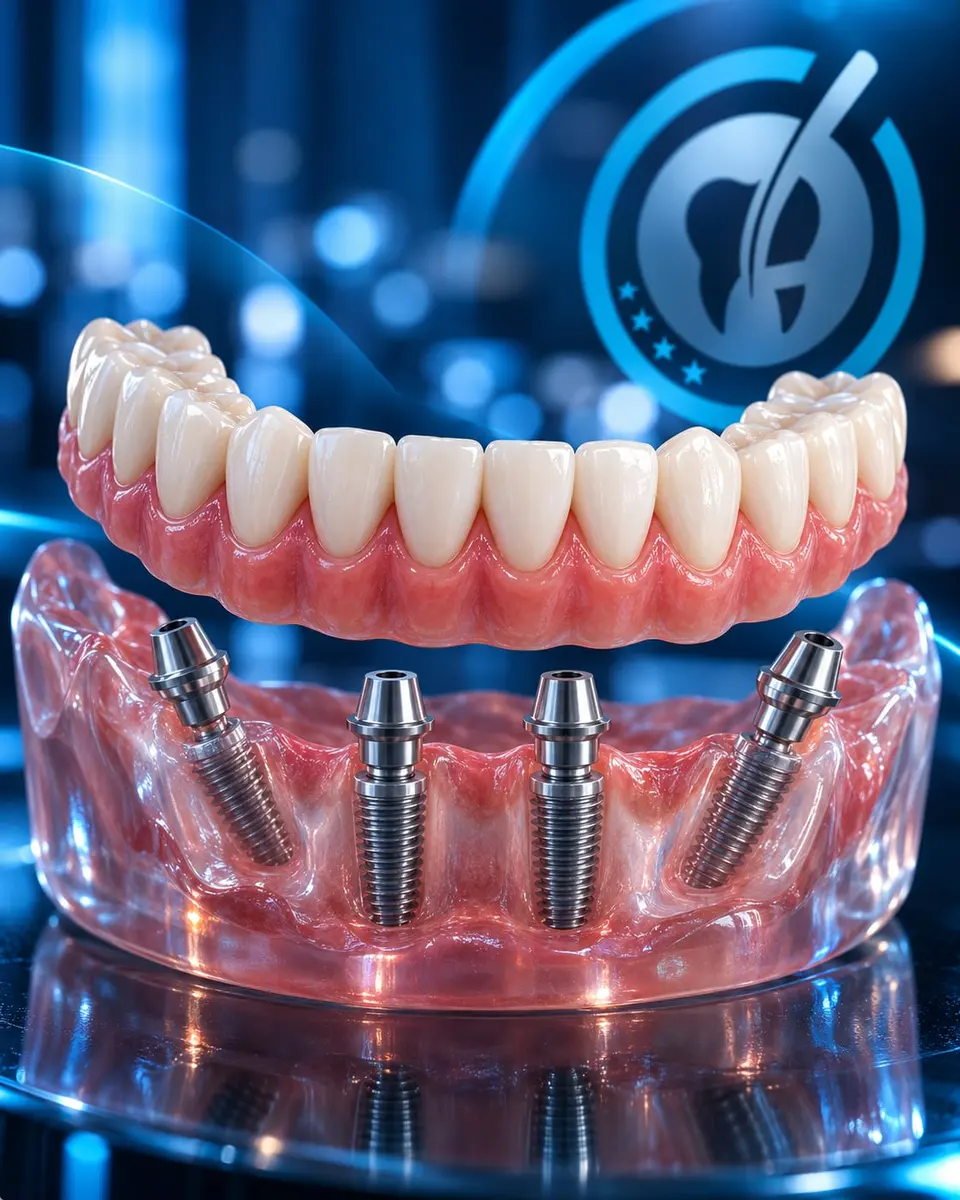
A fixed full-arch bridge on four implants.
 Treatment
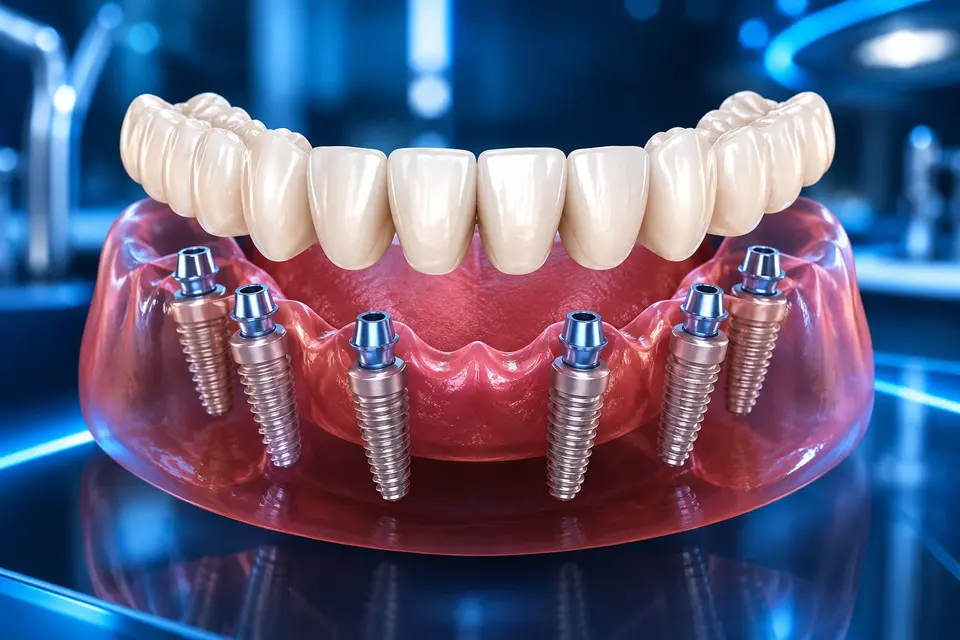
Six implants per arch for added support.
 Treatment
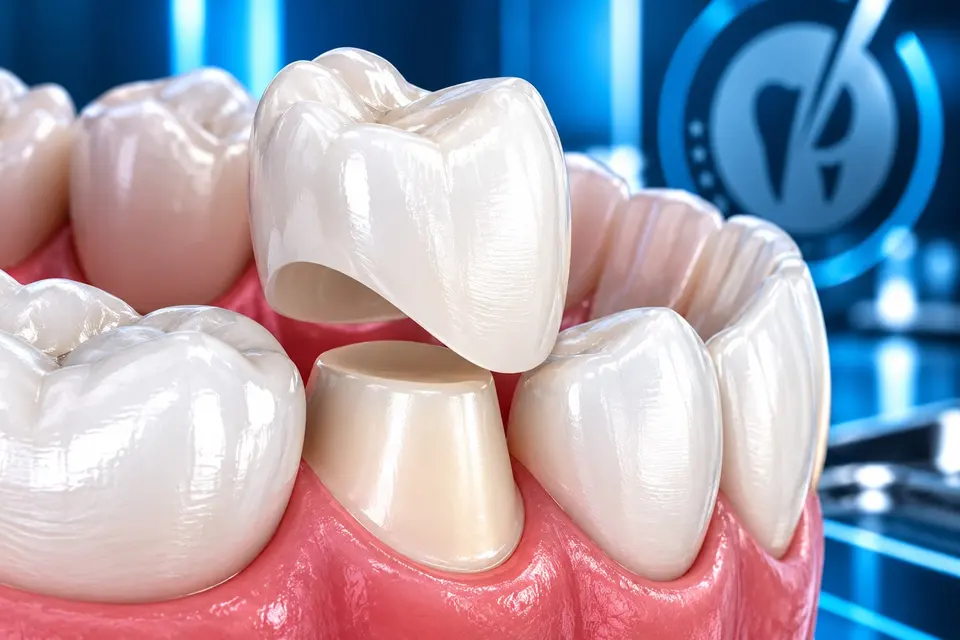
Rebuild damaged teeth in zirconium or E-max ceramic.
Cost guideWhat drives the price and what is included
Your free smile plan
Free review of your photos and X-rays, a written plan and per-unit pricing — within 24 hours.
A multilingual coordinator replies within 24 hours.
Get your free smile plan
Free Smile Plan