

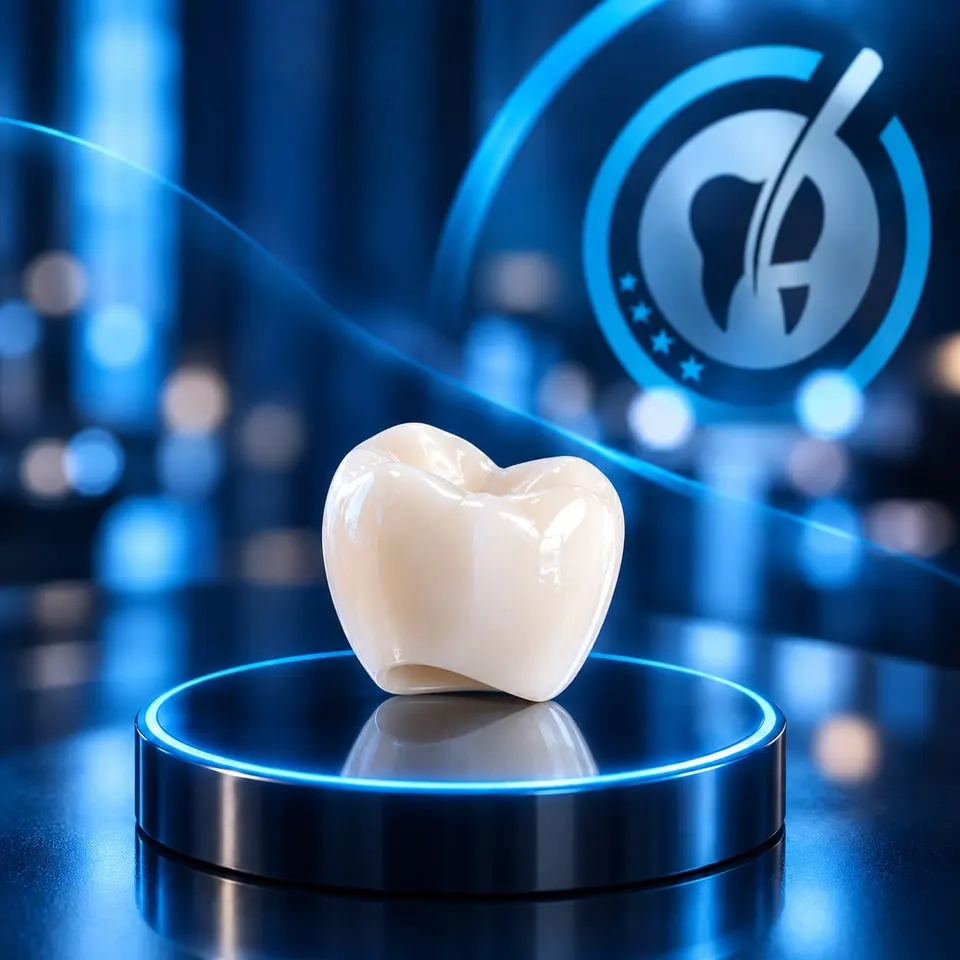
Monolithic zirconium
- Strength
- Highest
- Aesthetics
- Very good
- Best position
- Molars, bridges, full arches
- Metal-free
- Yes
Restorative dentistry
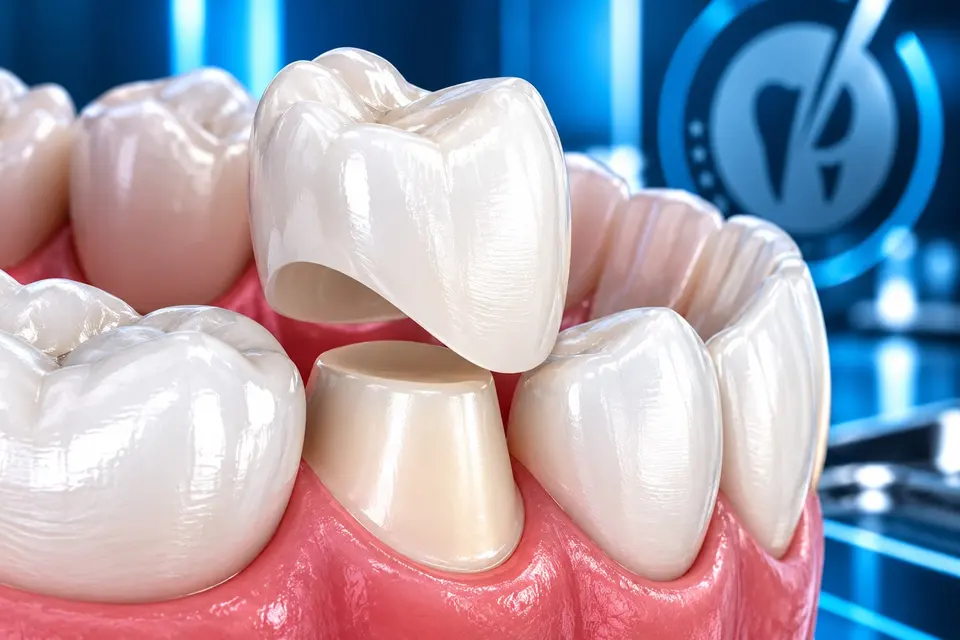
A crown rebuilds a damaged tooth back to full strength and natural shape — covering it completely and protecting what remains.
Before and after
A selection of real BlueMagic Group patients, photographed before and after treatment and published with their consent.
These cases cover a range of treatments and are not specific to this page. Individual results vary. Tap a photo to enlarge it.
Understand the treatment
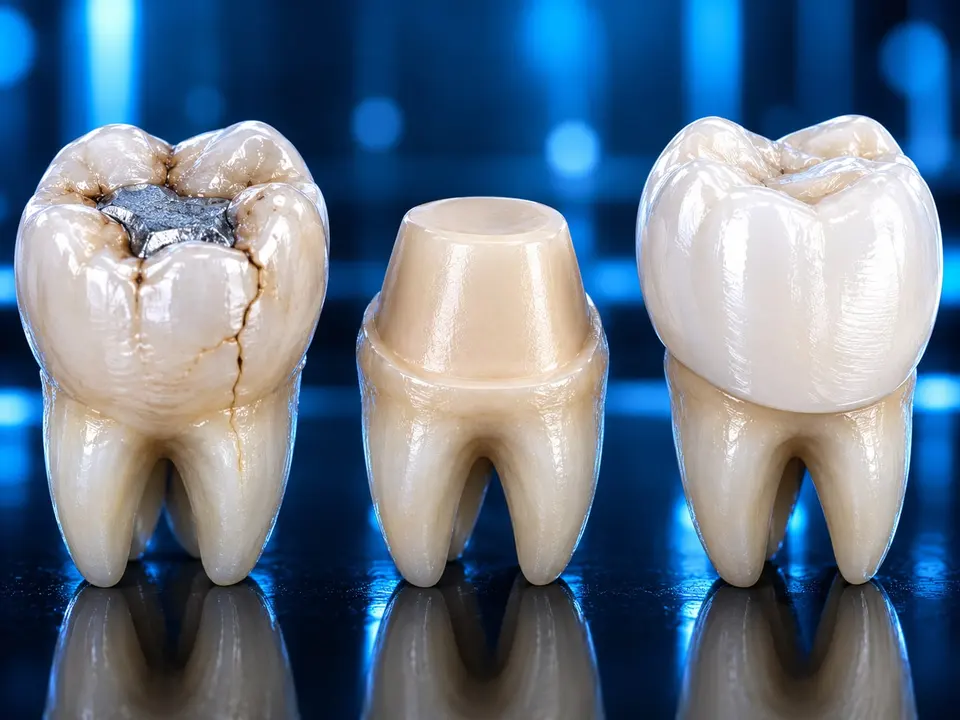
A crown is a precision-made cap that covers a tooth entirely, restoring its shape, strength and appearance. It is the standard treatment for teeth that are cracked, heavily filled, broken, root-treated or too worn for a filling to fix — and it is also how an implant becomes a visible tooth.
At BlueMagic Group Dental Tirana, crowns are crafted in Ivoclar-Vita ceramics in three main options: monolithic zirconium — the metal-free workhorse combining strength with natural translucency; E-max — pressed lithium disilicate with outstanding aesthetics for visible front teeth; and laminate crowns for select cosmetic cases. Your dentist recommends the material per tooth, because a molar and a front incisor have different jobs.
The tooth is prepared under local anaesthesia — decayed or weakened structure is removed and the tooth is shaped to receive the crown. Digital or conventional impressions go to the laboratory, the shade is matched against your natural teeth in daylight-balanced conditions, and the finished crown is tried in, adjusted and cemented. Most crown plans complete within a single visit to Tirana, over several days, thanks to in-house laboratory scheduling.
Crown materials
Preparing a tooth for a full crown removes enamel and is not reversible. Where a more conservative option — a filling, onlay, or bonding — would genuinely serve you, that is what we will recommend.

Is this you?
Candidacy is always confirmed by the dental team through a review of your photos and X-rays — this list is general guidance, not a diagnosis.
Gains and trade-offs
Benefits
Limitations
Treatment stages
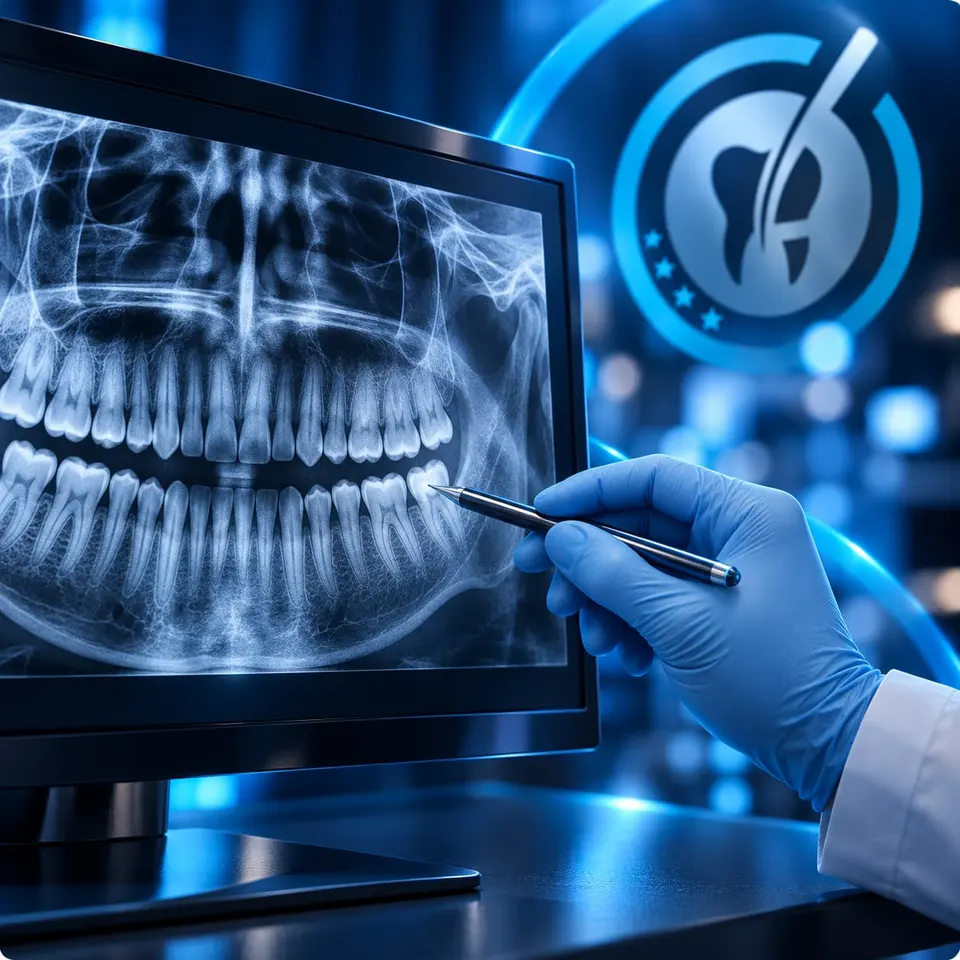
Photos and X-rays reviewed; material chosen per tooth; shade matched with you in the chair.
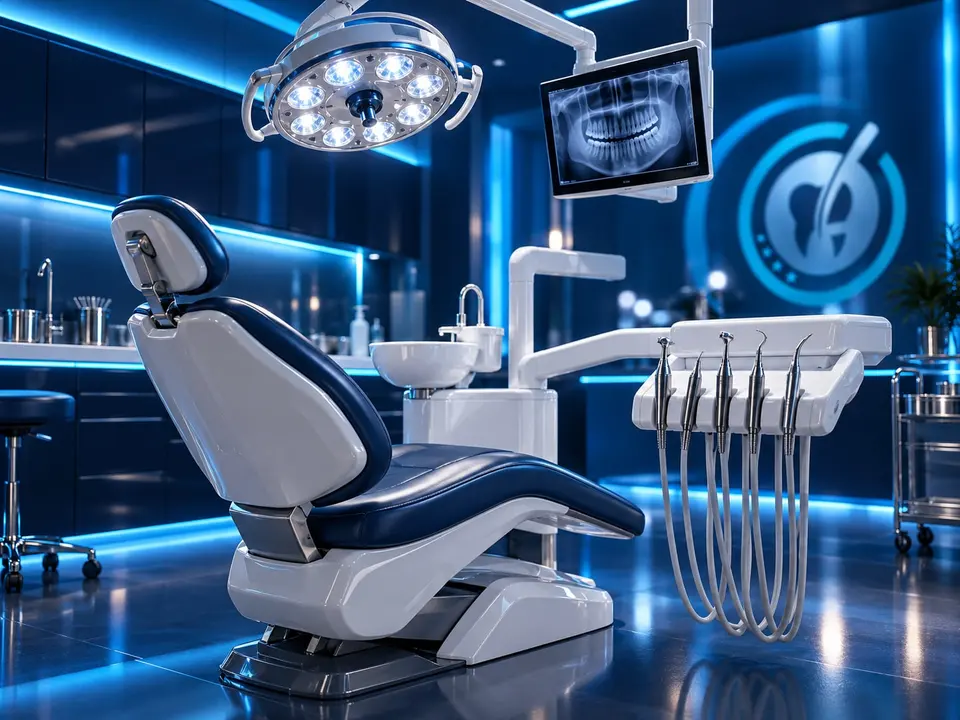
The tooth is shaped under local anaesthesia and an impression is taken for the laboratory.

A temporary crown protects the prepared tooth while the laboratory works.
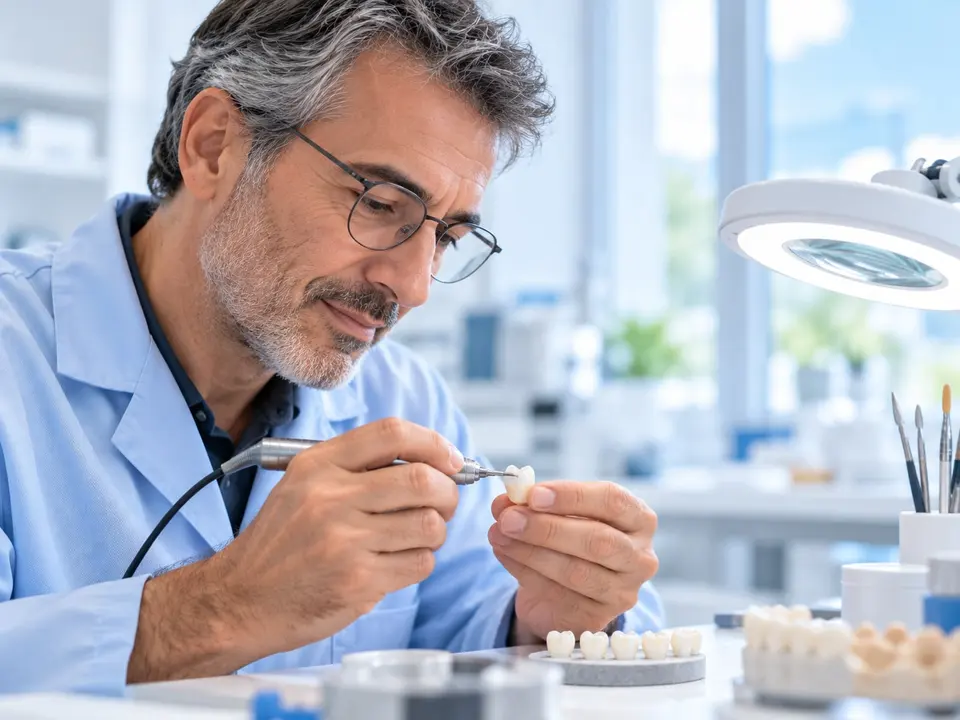
Your crown is milled or pressed in Ivoclar-Vita ceramic and finished by hand.

Fit, contact points and shade checked with you — adjusted until right, then cemented.
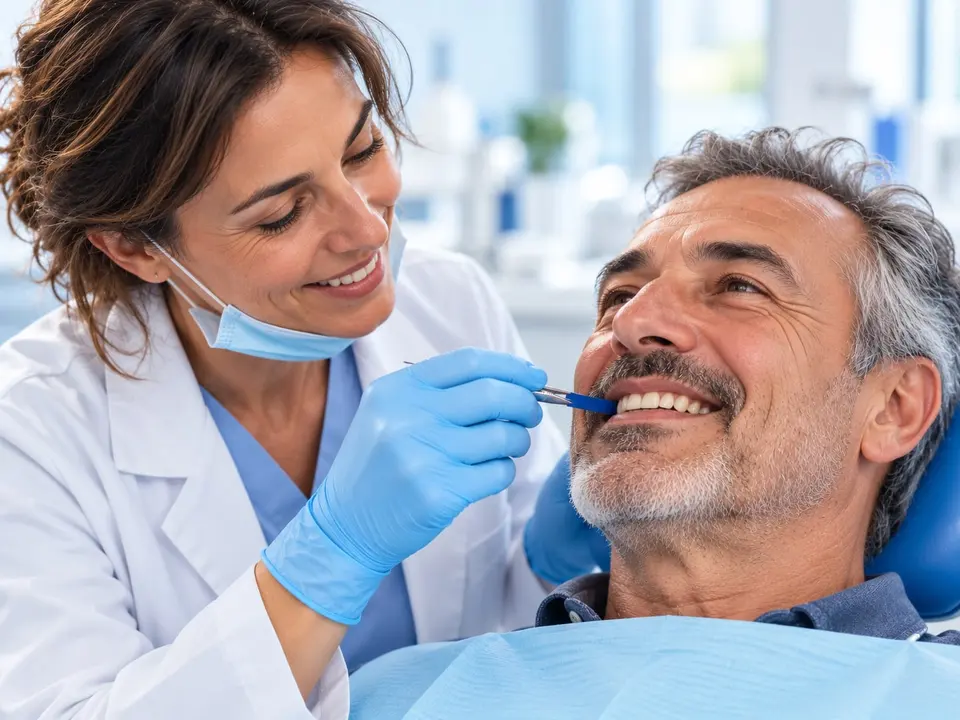
Occlusion verified and polished; care instructions handed over in writing.
Transparent pricing
The number of units, materials and any groundwork determine your total — which is why every quote follows a clinical review of photos and X-rays and arrives in writing.
Every quote is personal: it is prepared only after a clinical review of your photos and X-rays, and that written plan is the binding one.
A few smile photos and, if you have one, a panoramic X-ray. It takes minutes and costs nothing.
The dental team maps every tooth, the materials and the visits, then sends a fixed written quote, usually within 24 hours.
Your plan is the reference for every visit. Any change is explained and agreed with you first, in writing.
Compare
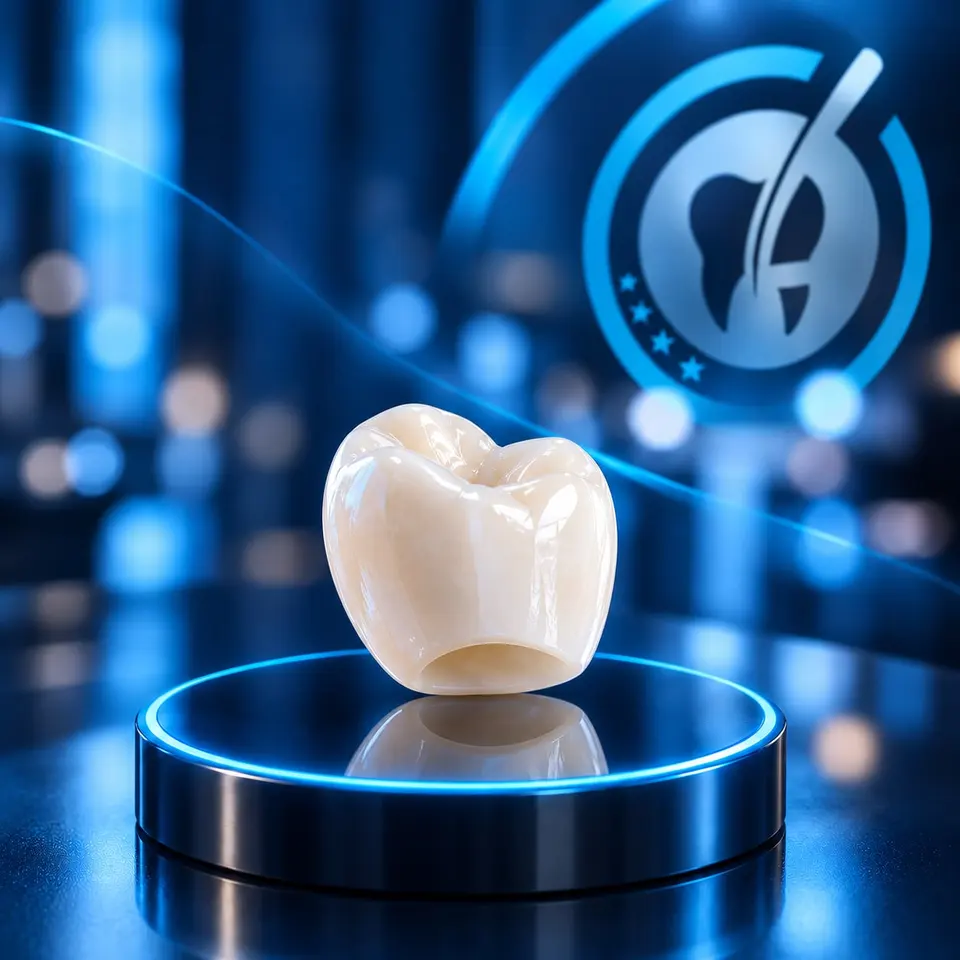
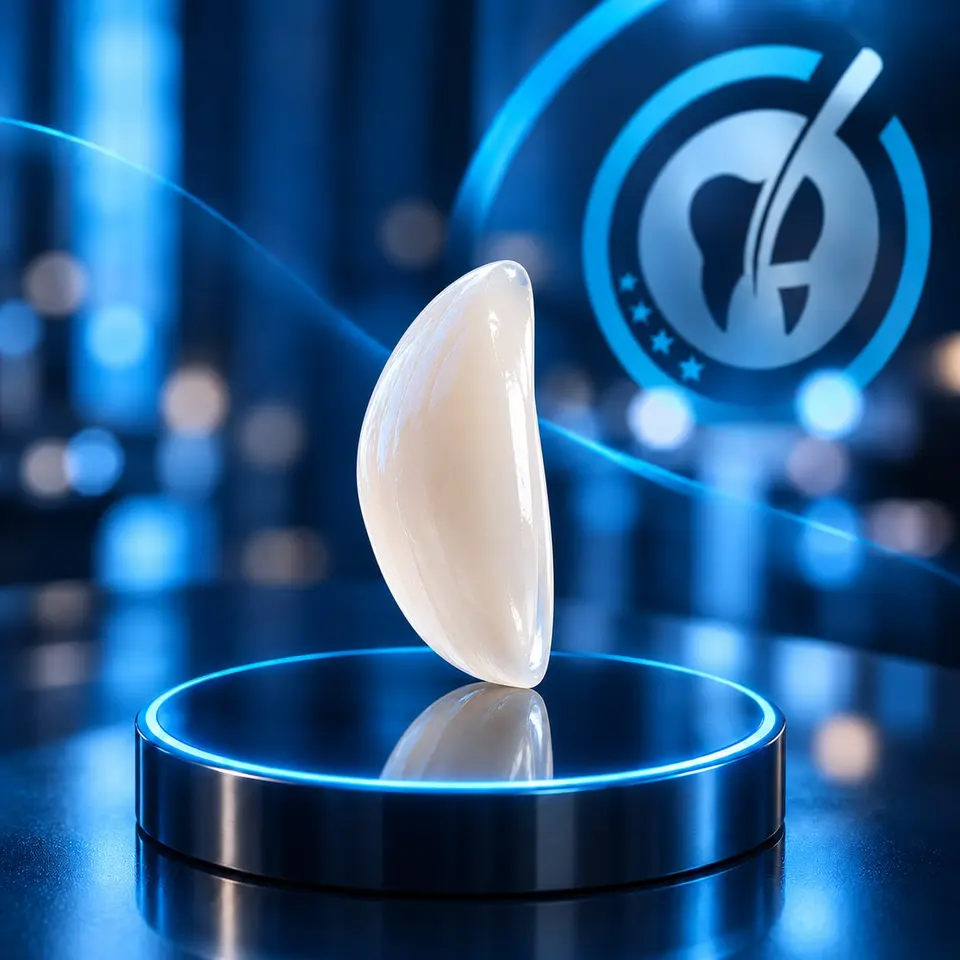
Many smile plans mix materials — zirconium where force lives, E-max where light matters. Your written plan specifies the material per tooth.
Verified reviews
Real 5-star reviews from Trustpilot, where BlueMagic Group Clinic is rated 4.6/5 from 1,475 reviews.
“Wonderful experience I came from the US and got crowns done. My dentist was amazing he exceeded my expectations. The staff was so friendly if I had to do it all over I would pick this company every time”
Trustpilot ↗
“True to their word. Everything they promised was delivered and they stayed true to their word. Very convenient nothing to worry about. All you have to do is show up. They take care of the rest. Walter my care coordinator is with me every step of the way pre, during and post surgery. Great service.”
Trustpilot ↗
“They are 100% top-quality professionals. From the very first moment you contact them until your process is complete, they always answer all your doubts and questions. I highly recommend them. Bekim Hoxha was the first person I spoke with; he is an incredible and very kind individual—excellent work.”
Trustpilot ↗
Leadership & medical team
BlueMagic Group is led by its founders and a dedicated medical team, with one standard of care from the first message to your final check-up.
You always meet your treating dentist, by name, before any treatment begins.



After treatment
Sensitivity to hot and cold for a few days after preparation is normal and settles.
With a temporary crown
Avoid sticky and very hard foods on that side.
After cementation
Eat normally the same day once anaesthesia wears off.
Any persistent high spot in your bite is a five-minute adjustment — tell us before you fly.
Risks, honestly
Crown treatment is routine dentistry with a long safety record, but honesty requires the full picture: preparation permanently removes tooth structure; a small percentage of prepared teeth develop pulp irritation that later needs root canal treatment; and crown margins remain vulnerable to decay if hygiene lapses. Ceramic can chip under extreme load — night guards are recommended for patients who grind.
Questions

Ask a coordinator in your language. Send a photo if it helps: a person answers, usually within 24 hours.
Chat on WhatsAppMost crown plans complete in a single visit of several days: preparation and impressions early in the stay, laboratory crafting mid-stay, and fitting before you fly. Larger smile plans may need a few extra days — your written plan states the exact schedule.
It is done under local anaesthesia and most patients describe it as no more eventful than a large filling. Some temperature sensitivity for a few days afterwards is normal.
You do not have to choose alone. As a rule of thumb: zirconium for strength in the back of the mouth and full arches, E-max for maximum light-play on front teeth. The team recommends per tooth and explains why.
A realistic expectation is 10–15 years, often longer with good hygiene and check-ups. What shortens crown life is decay at the margin and heavy grinding — both manageable with care and, where needed, a night guard.
No. Most crowned teeth keep their living nerve. Only teeth that needed root canal treatment beforehand are non-vital — and the crown is what protects those from fracture.
No — ceramic does not respond to whitening. If you plan to whiten your natural teeth, do it before crowns are made, so the new shade can be matched to the brighter baseline.
Keep exploring
 Treatment
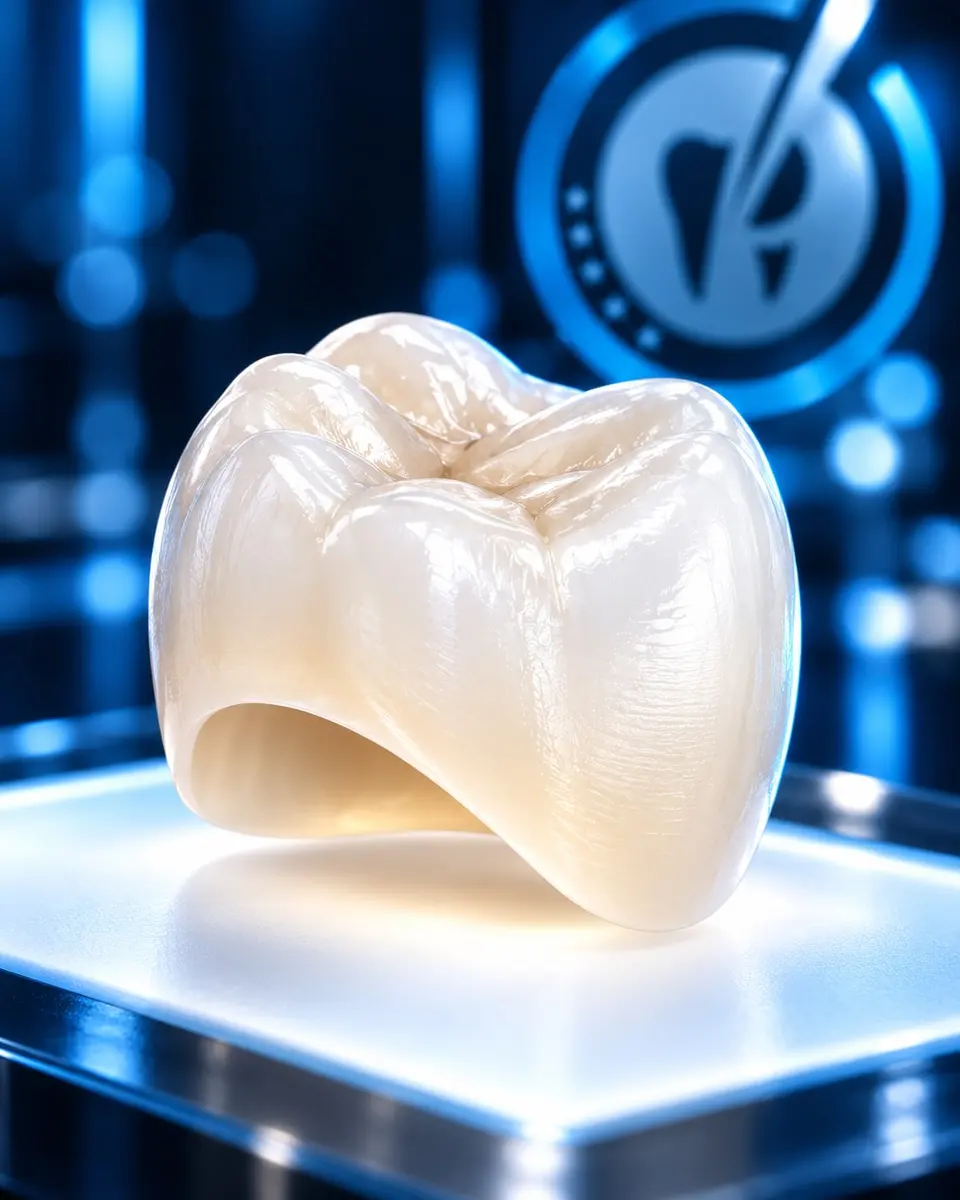
Metal-free strength with natural translucency.
 Treatment
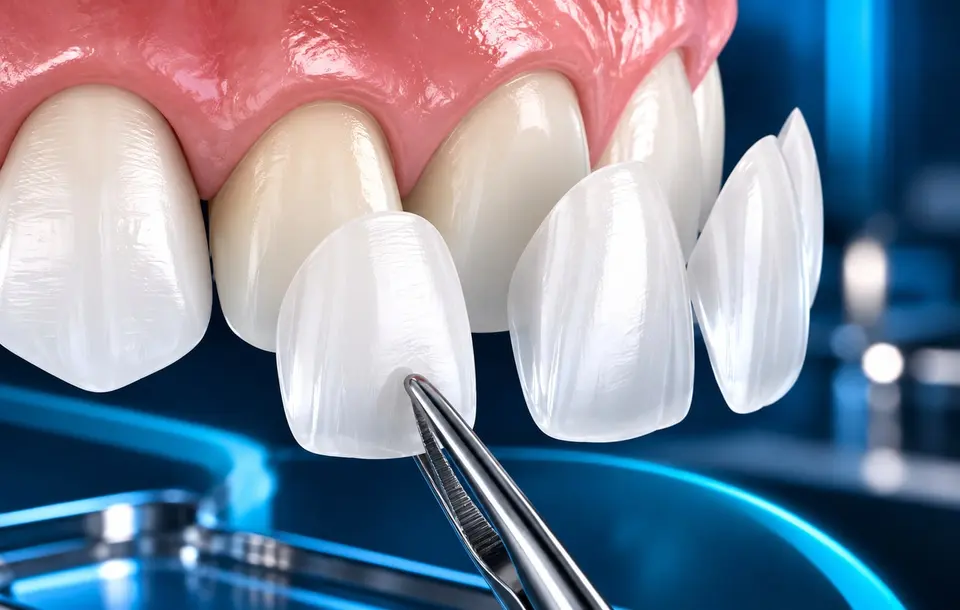
Thin ceramic facings for shape, colour and symmetry.
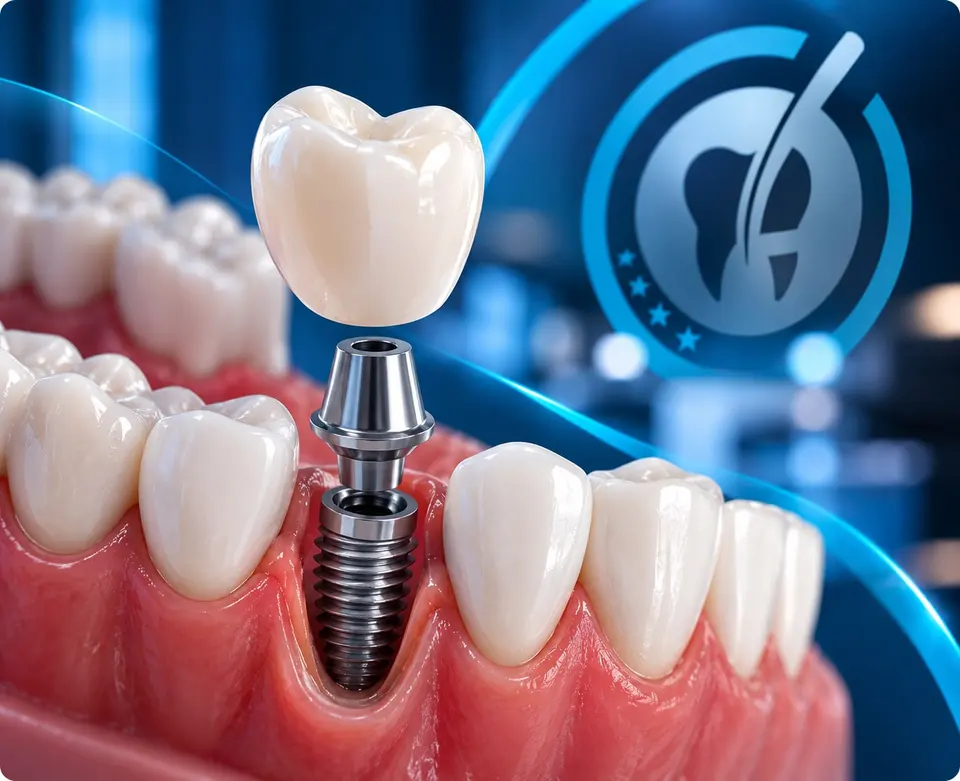 Treatment
Replace missing teeth with titanium roots and precision crowns.
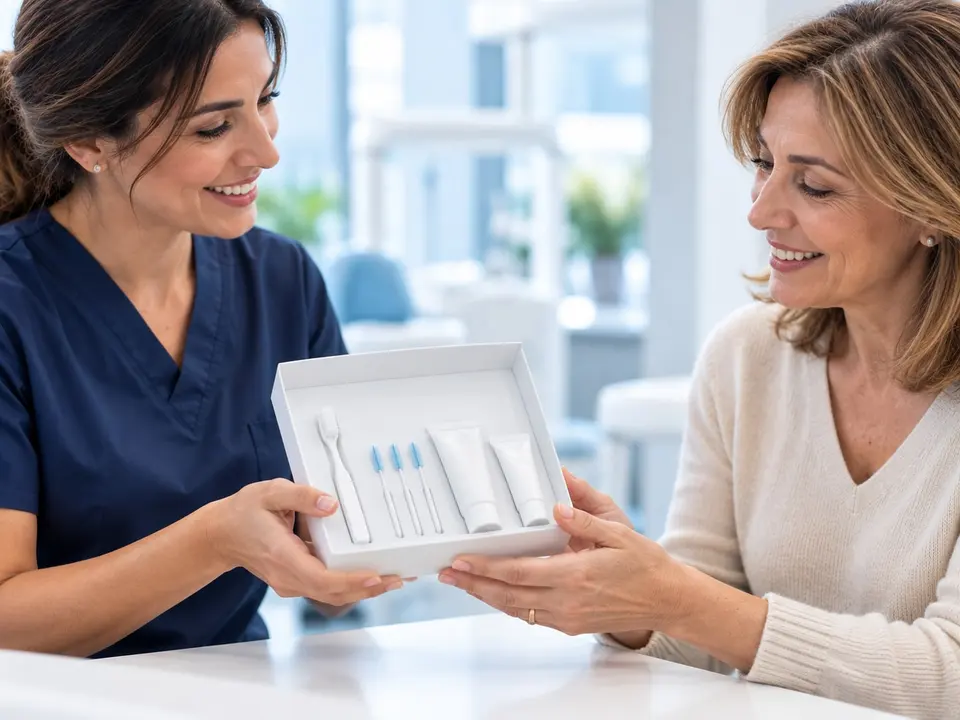 Aftercare
The treatment is half the result; the other half happens at your bathroom sink.
Your free smile plan
Free review of your photos and X-rays with material recommendations per tooth — in writing.
A multilingual coordinator replies within 24 hours.
Get your free smile plan
Free Smile Plan