

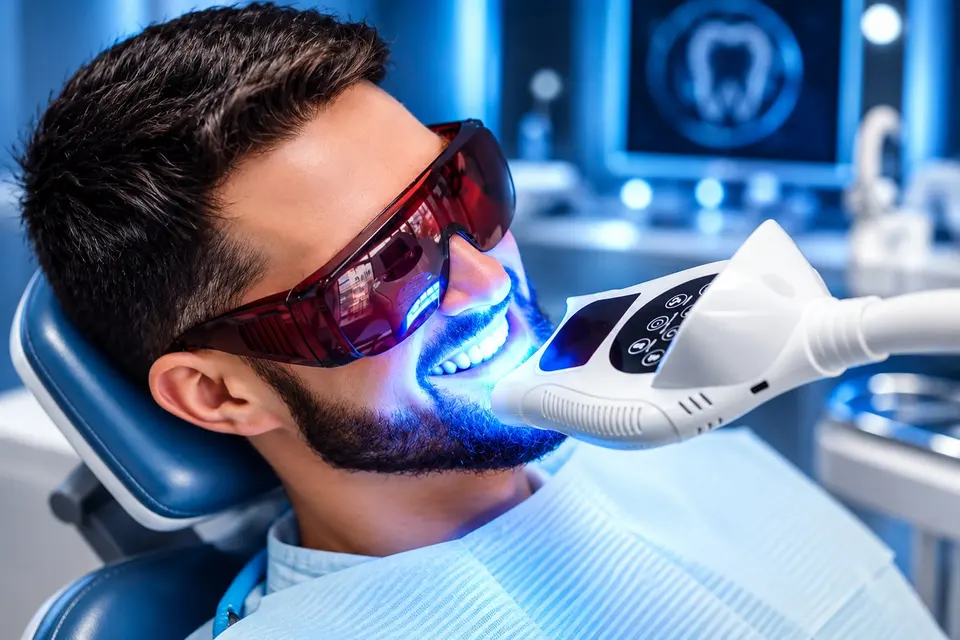
In-clinic laser whitening
- Gel strength
- Clinical concentration, supervised
- Gum protection
- Professional isolation
- Result speed
- One session
- Assessment first
- Yes — cause of discoloration checked
- Restoration awareness
- Planned around crowns and fillings
Cosmetic dentistry
Clinic-grade laser whitening that lifts years of staining in a single session — with an honest assessment first, because how well whitening works depends on why your teeth are discoloured.
Before and after
A selection of real BlueMagic Group patients, photographed before and after treatment and published with their consent.
These cases cover a range of treatments and are not specific to this page. Individual results vary. Tap a photo to enlarge it.
Understand the treatment
Professional whitening uses a controlled concentration of peroxide gel, activated in-clinic — in our case with laser light — to break down the pigmented molecules that have soaked into enamel over years of coffee, tea, wine and time. Gums are isolated and protected, the gel is applied in supervised cycles, and the shade change is measured against a scale you can see.
The clinical version differs from shop-bought kits in three ways that matter: gel concentration only a dentist may use, protection of your gums and soft tissues, and a professional judgement call before anything starts — because not all discoloration responds to bleach.
Whitening works on stains within enamel — the yellowing of age and diet. It works far less, or not at all, on discoloration that comes from inside the tooth or from materials: greyish tetracycline banding, a tooth darkened after trauma or root canal treatment, white fluorosis patches, and every crown, veneer or filling, which do not bleach at all. This is why an assessment comes first: we tell you what whitening will realistically achieve for your specific discoloration, and what would need a different tool.
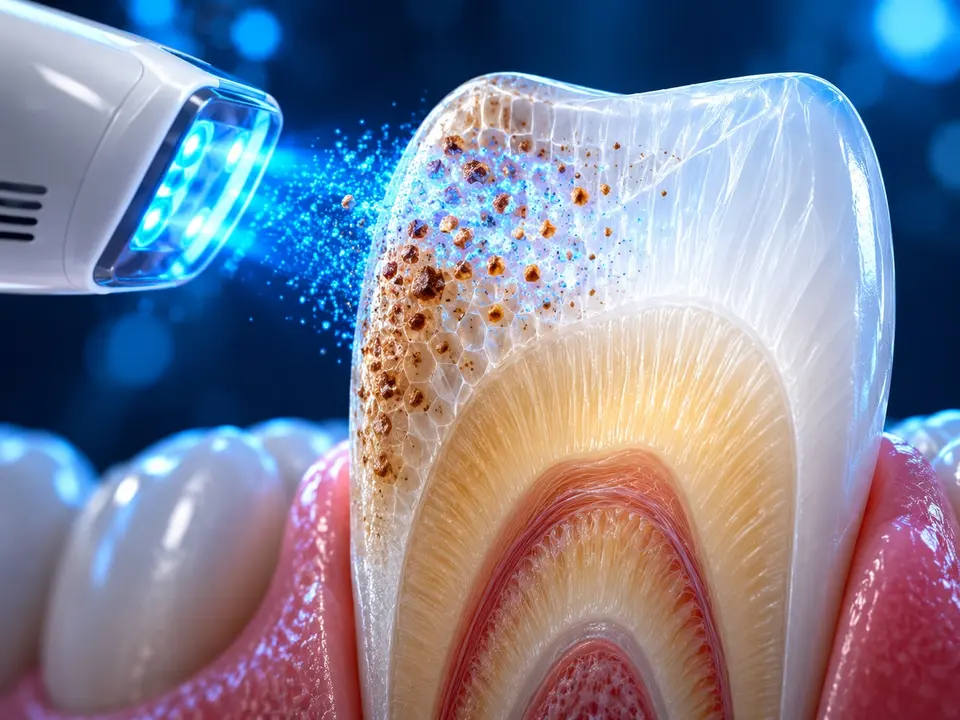
If your discoloration will not respond well to bleaching, we will say so before you pay for a session — and explain what would work instead, whether that is internal whitening, bonding or ceramics.

Is this you?
Candidacy is always confirmed by the dental team through a review of your photos and X-rays — this list is general guidance, not a diagnosis.
Gains and trade-offs
Benefits
Limitations
Procedure
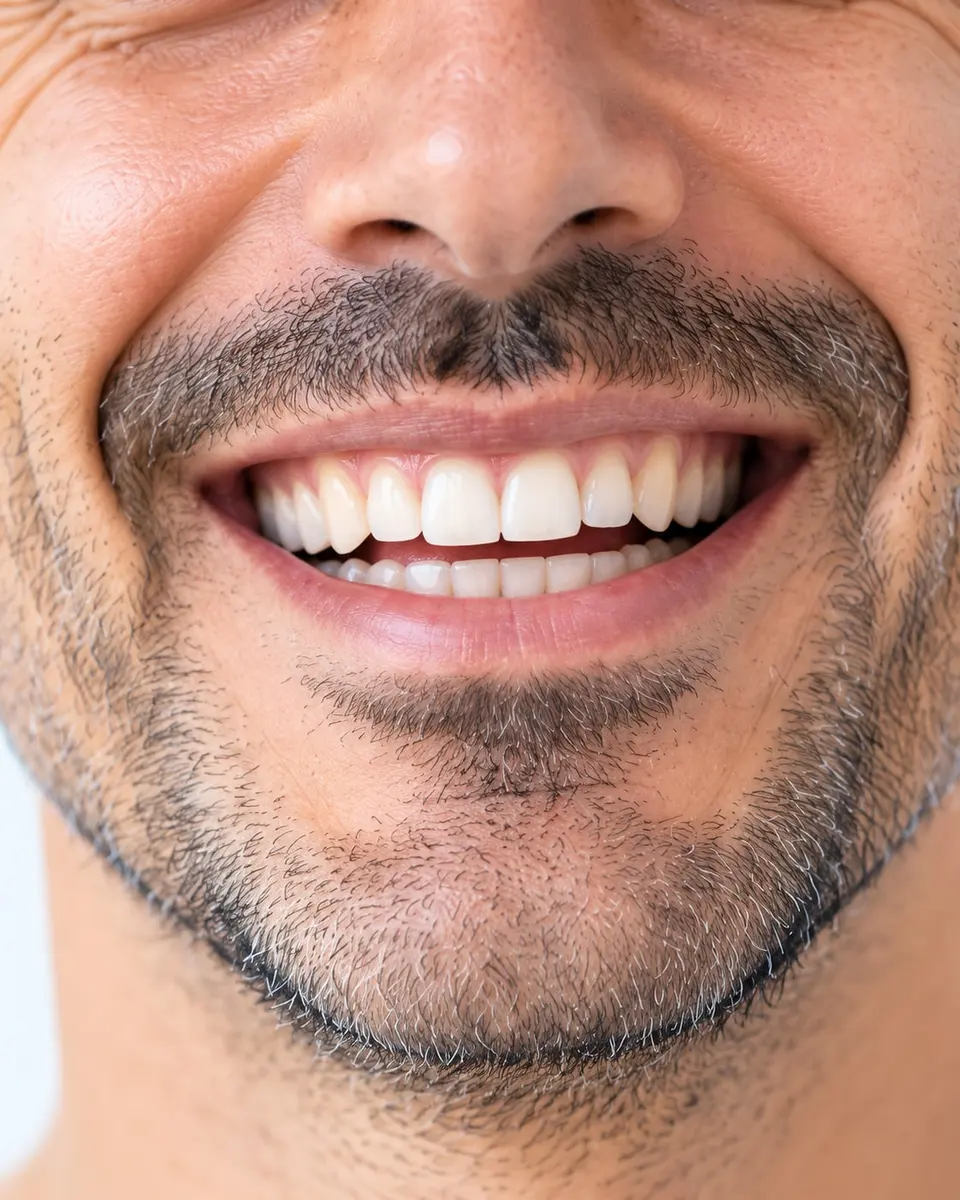
Starting shade recorded; cause of discoloration assessed and realistic target agreed.
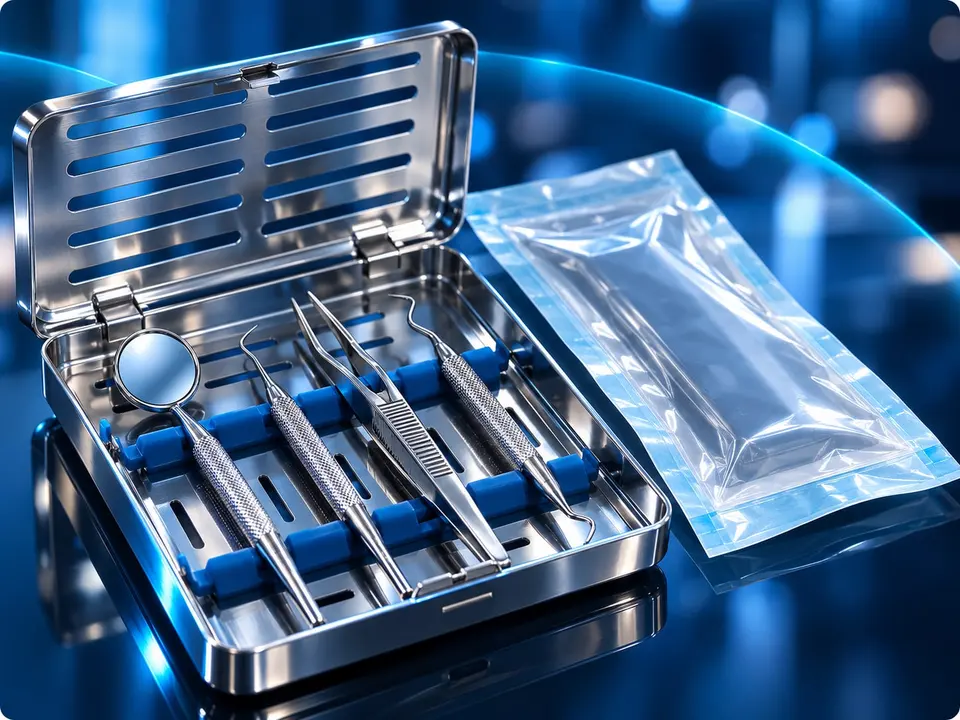
Surface deposits removed so the gel works on enamel, not on plaque. Professional cleaning if needed.
A protective barrier isolates your gums and lips from the gel.
Whitening gel applied and light-activated in supervised cycles, with shade checks between.
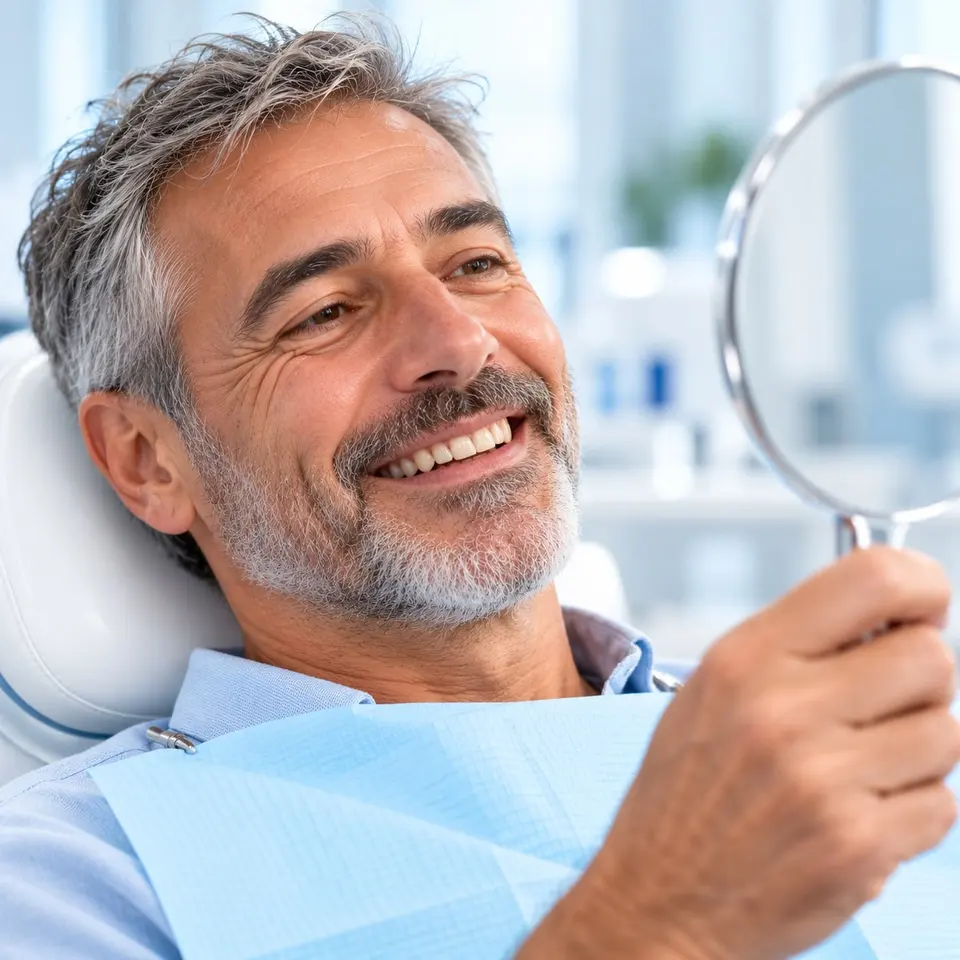
End shade documented; written advice on the white diet for the first 48 hours.
Transparent pricing
Your shade assessment comes first, so you only pay for whitening your discoloration can actually respond to.
Every quote is personal: it is prepared only after a clinical review of your photos and X-rays, and that written plan is the binding one.
A few smile photos and, if you have one, a panoramic X-ray. It takes minutes and costs nothing.
The dental team maps every tooth, the materials and the visits, then sends a fixed written quote, usually within 24 hours.
Your plan is the reference for every visit. Any change is explained and agreed with you first, in writing.
Compare
Home top-up products can be a sensible maintenance layer after a clinical session — used on advice, not instead of assessment.
Verified reviews
Real 5-star reviews from Trustpilot, where BlueMagic Group Clinic is rated 4.6/5 from 1,475 reviews.
“Wonderful experience I came from the US and got crowns done. My dentist was amazing he exceeded my expectations. The staff was so friendly if I had to do it all over I would pick this company every time”
Trustpilot ↗
“True to their word. Everything they promised was delivered and they stayed true to their word. Very convenient nothing to worry about. All you have to do is show up. They take care of the rest. Walter my care coordinator is with me every step of the way pre, during and post surgery. Great service.”
Trustpilot ↗
“They are 100% top-quality professionals. From the very first moment you contact them until your process is complete, they always answer all your doubts and questions. I highly recommend them. Bekim Hoxha was the first person I spoke with; he is an incredible and very kind individual—excellent work.”
Trustpilot ↗
Leadership & medical team
BlueMagic Group is led by its founders and a dedicated medical team, with one standard of care from the first message to your final check-up.
You always meet your treating dentist, by name, before any treatment begins.



After treatment
First 48 hours
Avoid strong colourants — coffee, red wine, tomato sauce, turmeric, smoking. Enamel is most absorbent immediately after whitening.
Sensitivity, if any, settles within a day or two; desensitising toothpaste helps.
Longevity
Months to a few years depending on your diet and habits; top-up sessions are simpler than the first.
Risks, honestly
Professionally supervised whitening has an excellent safety record. The main effects are transient: temperature sensitivity and occasional gum irritation where gel contacts soft tissue — largely prevented by proper isolation. Whitening does not weaken enamel when used at clinical protocols. The real risk is expectational: bleaching a smile whose discoloration was never bleach-responsive. Our assessment exists precisely to prevent you paying for that.
Questions

Ask a coordinator in your language. Send a photo if it helps: a person answers, usually within 24 hours.
Chat on WhatsAppIt depends on your starting shade and the cause of the discoloration — diet stains on yellowish teeth respond best. We record your starting shade and give you a realistic target at assessment rather than promising a number blind.
Some patients feel transient sensitivity — brief zings during or after the session — which settles within a day or two. Gum protection prevents the irritation associated with home kits.
At professional protocols, no — the peroxide breaks down stain molecules without structurally weakening enamel. The horror stories come from overused, unsupervised products.
Ceramic and composite do not respond to bleach — only natural enamel does. That is why whitening comes before new crowns or veneers in any plan: we whiten first, then match the new ceramics to the brighter shade.
Typically months to a few years, decided mostly by coffee, tea, wine and smoking. Top-up sessions are shorter and cheaper than the first, and maintenance products can stretch the interval.
A tooth darkened from within — usually after root canal treatment — needs internal whitening or a ceramic solution rather than surface bleaching. This is exactly the kind of case the assessment identifies.
Keep exploring
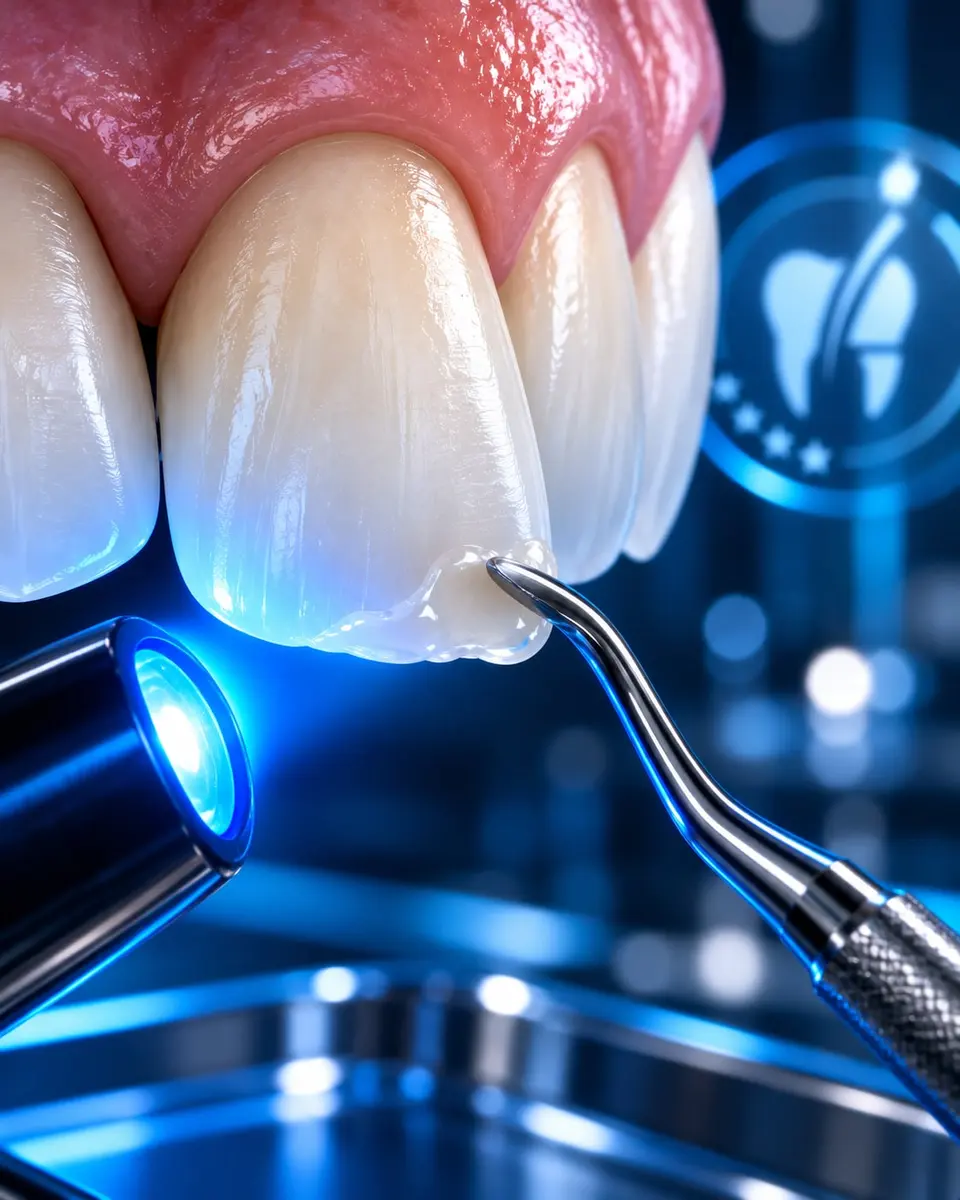 Treatment
Same-day fixes for chips, edges and small gaps.
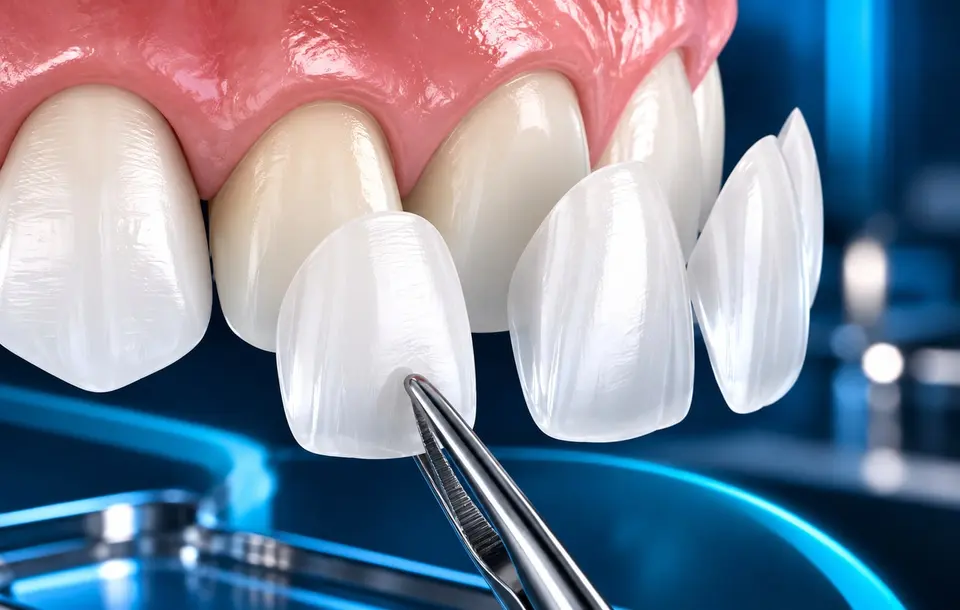 Treatment
Thin ceramic facings for shape, colour and symmetry.
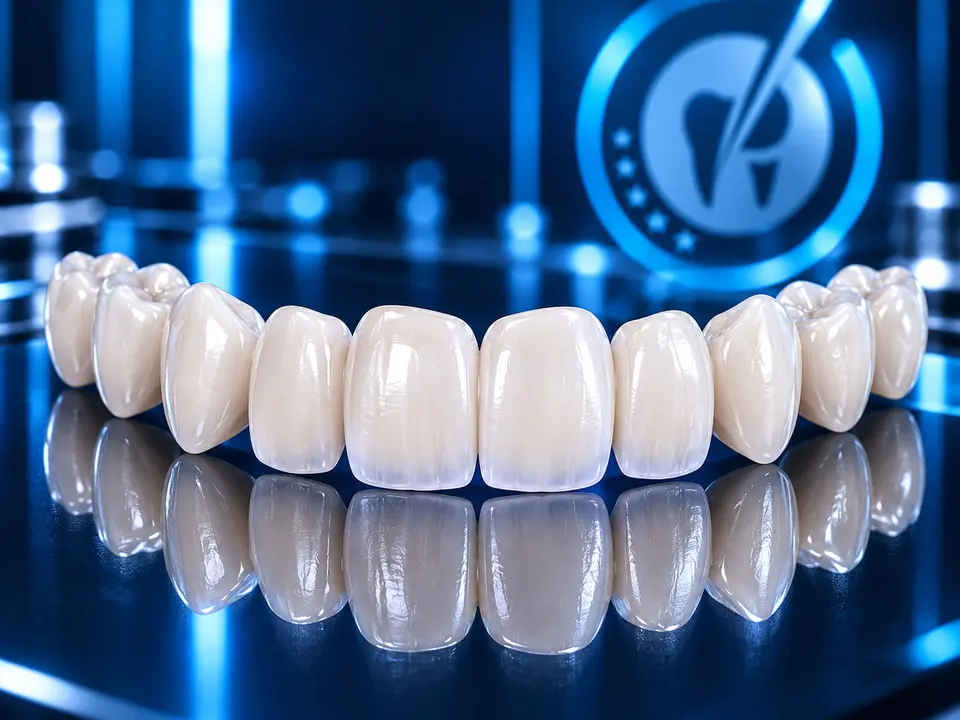 Treatment
A complete smile makeover around one design.
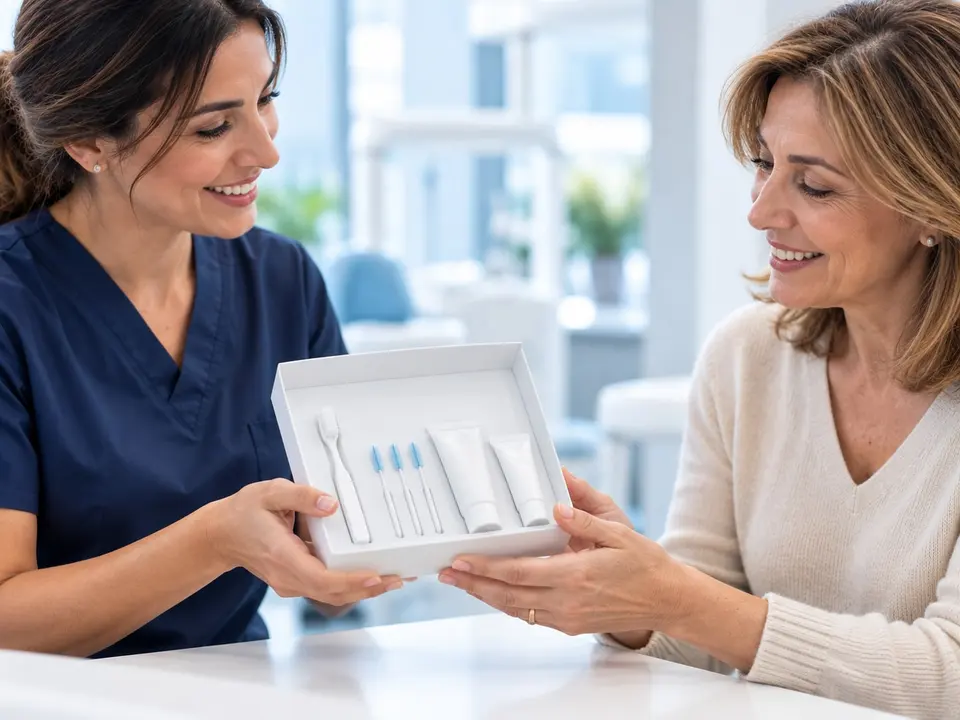 Aftercare
The treatment is half the result; the other half happens at your bathroom sink.
Your free smile plan
Free assessment of your discoloration type — with a realistic target before you pay for anything.
A multilingual coordinator replies within 24 hours.
Get your free smile plan
Free Smile Plan