
On this page
Both can transform the teeth you show the world. One covers the front surface; the other caps the whole tooth. The difference sounds technical until you realise what it decides: how much of your natural tooth survives the makeover. Here is the decision framework, sales pitch removed.
The one-sentence versions
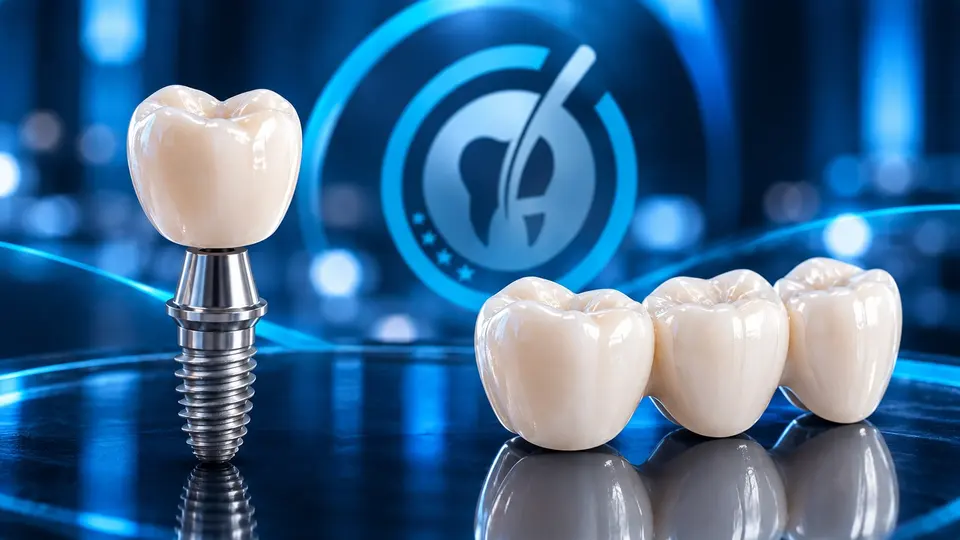
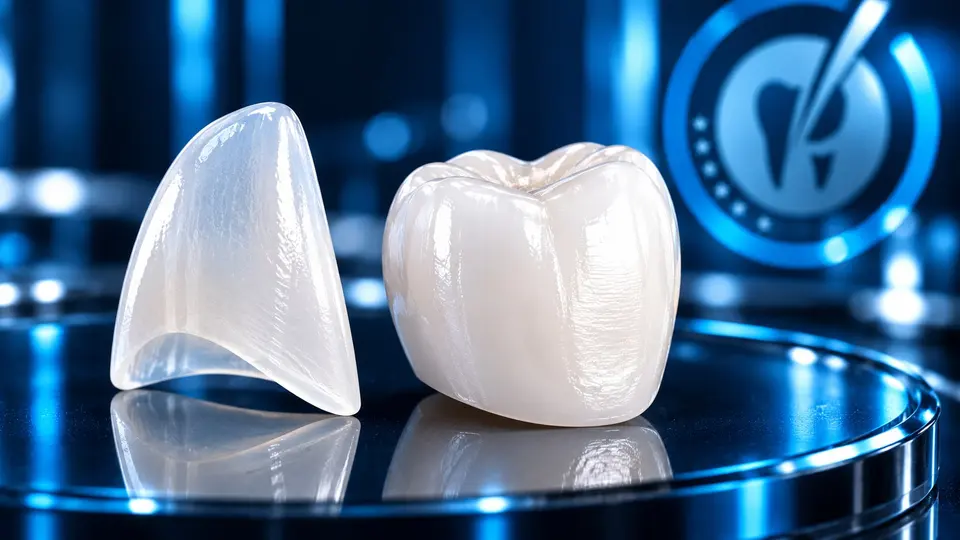
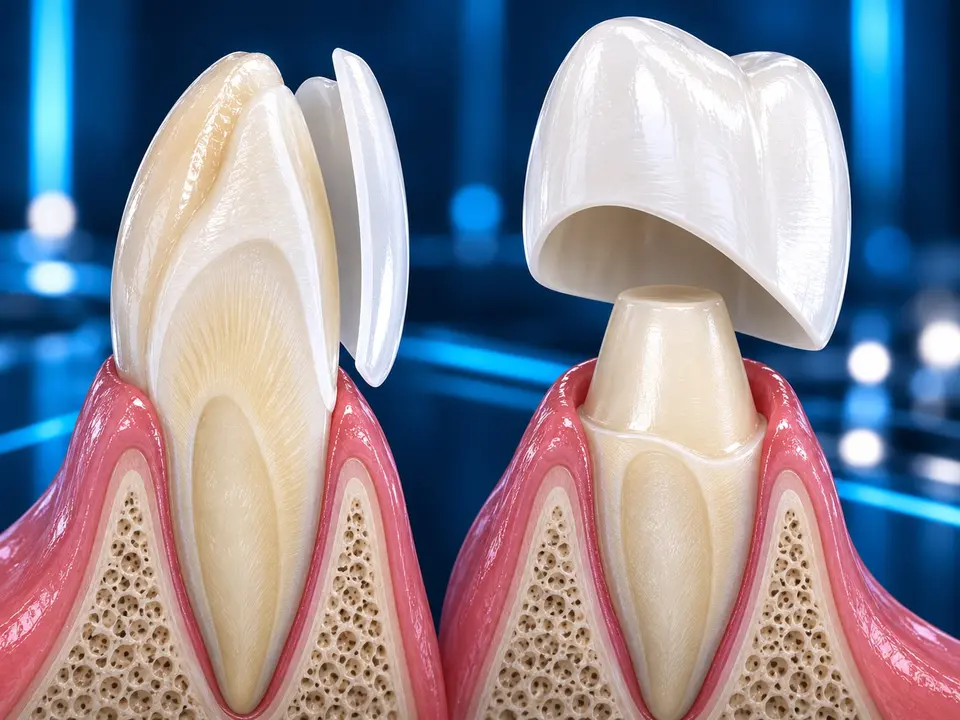
A veneer is a thin ceramic facing — often under a millimetre — bonded to the front of a tooth to change its colour, shape and length. A crown is a full-coverage cap that replaces the entire outer surface of a tooth, restoring its strength as well as its looks.
The rule of thumb that settles most cases
Healthy tooth that looks wrong: veneer. Damaged tooth: crown. A structurally sound incisor with staining, wear or minor misalignment does not need its whole circumference removed — a veneer changes what shows and spares the rest. A tooth that is cracked, heavily filled or root-treated needs structural protection that a facing cannot provide — a crown holds it together under load.
Healthy tooth that looks wrong: veneer. Damaged tooth: crown.
The irreversibility conversation
Neither treatment is a haircut. Veneer preparation removes a thin layer of enamel in most cases — permanently; genuinely no-prep cases exist but are the minority, whatever social media suggests. Crown preparation removes substantially more, all the way around. On the preservation scale: bonding (usually nothing removed) → veneer (thin front layer) → crown (the full outer surface). Honest planning starts at the conservative end and moves right only when the tooth’s condition demands it — never because the pricier option was easier to sell.
Strength, longevity and maintenance
- Strength: crowns reinforce; veneers decorate. A grinding habit threatens veneers first — night guards are mandatory advice for bruxers with either.
- Longevity: both realistically last 10–15 years with good care; both fail early with margin decay and heavy habits.
- Repairs: a chipped veneer usually means remake; crowns likewise. Composite bonding, the conservative cousin, is patchable chairside — part of why it suits younger patients.
- Whitening: ceramic never bleaches. Whiten natural teeth first, then match ceramics to the new shade — sequence matters.
Cost, unit by unit
At our Tirana clinic, crowns are priced per unit by material — monolithic zirconium, E-max or laminate ceramics — with veneer cases quoted per tooth after review, since preparation design varies. Every unit is named in your written quote. In Western Europe the same materials routinely cost far more per unit, which is why multi-tooth smile plans are the cases where treatment travel makes the clearest financial sense.
The mixed-smile reality
Most real smiles are mixed: one incisor root-treated and dark, its neighbour healthy but worn. Cookie-cutter answers — all veneers, or all crowns — force some teeth into the wrong treatment. Good planning assigns the right restoration per tooth and unifies them under one shade and shape design, so the result reads as one smile rather than a committee of restorations. That per-tooth assignment, in writing, is exactly what a proper plan looks like — and what you should demand from any clinic quoting you.